
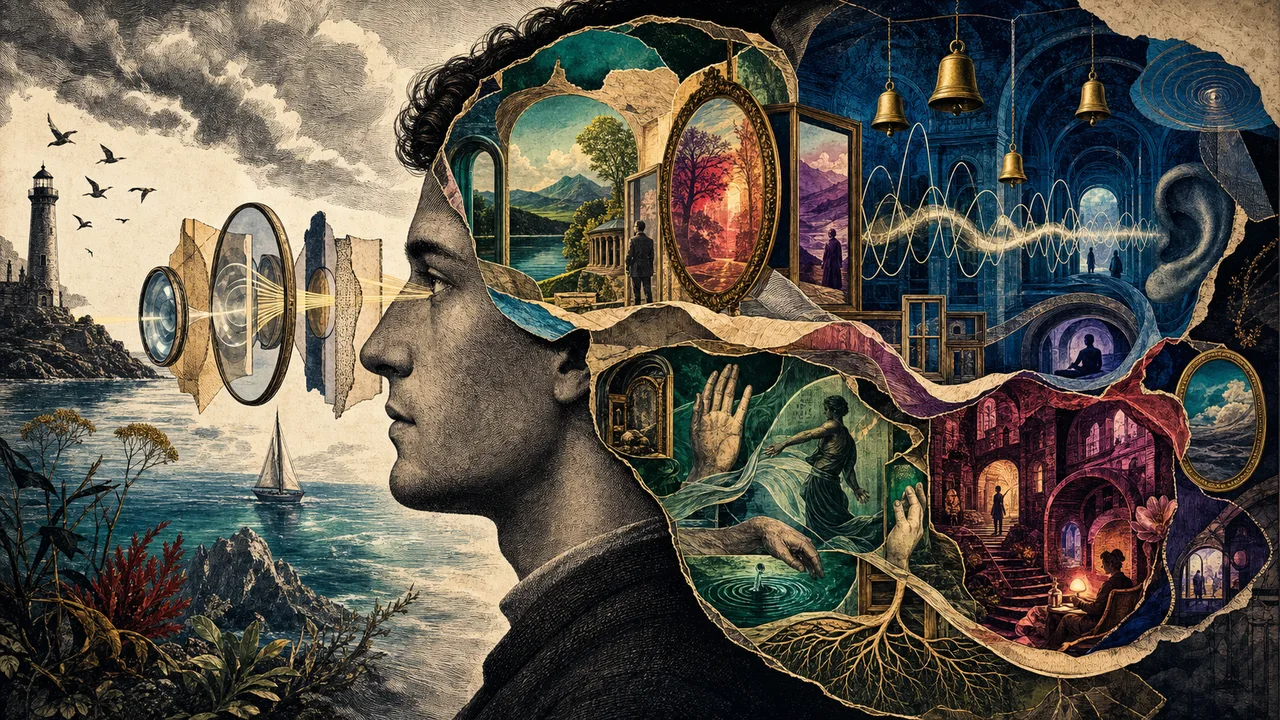
Internal representations in NLP are the images, sounds and sensations that the mind uses to record, remember, imagine and interpret an experience. This article examines in greater depth one of the foundations presented in the complete NLP guide.
In this article, you will understand what internal representations are, how stimuli become mental content, how visual, auditory and kinesthetic representations work, and the difference between remembering and mentally constructing.
Continue reading to follow these modes of representation and observe how they appear in everyday experience.
What are internal representations?
An internal representation is the way an experience appears within the mind. It may arise as an image, a voice, a song, a bodily sensation, a smell, a taste or a combination of these elements.
When someone thinks about their home, for example, they may visualize the facade, remember the sound of a door, feel a sense of comfort or recall the smell of a particular room. The physical house is not present, but a mental version of it has been activated.
This version does not contain every detail of the original experience. It gathers only the information that was recorded and that the mind considers necessary to recognize, interpret or respond to that content.
How stimuli become mental content
The process begins with stimuli received through the senses. A person sees, hears, touches, smells or experiences something, and this information is transformed into internal records.
The brain does not store the entire event as if it were a perfect recording. It selects parts of the experience, relates this information to previous content and creates its own organization for what happened.
After the external stimulus ends, this organization may remain available. The person can think about the event, reconstruct parts of it and produce a response without being in front of the original situation again.
Visual representation
Visual representation appears through internal images. A person may remember faces, objects, places, movements, shapes, distances and scenes that formed part of an experience.
These images may arise clearly or incompletely. Some people perceive detailed scenes, while others recognize only a visual impression, a general shape or a sense of space without seeing a defined image.
The mind can also create images that have never been seen. When planning a trip, decorating a house or imagining a future conversation, the person combines familiar information to construct a new mental scene.
Auditory representation
Auditory representation is formed by internal sounds. It includes words heard previously, music, noises, tones of voice and the dialogues a person holds with themselves.
When remembering a conversation, someone may internally hear the other person's voice. In some cases, they recall not only the words but also the rhythm, intensity and way in which the message was spoken.
Inner dialogue also forms part of this process. A person mentally comments on what happens, prepares responses, repeats criticism, organizes ideas or imagines what someone may say in a future situation.
Kinesthetic representation
Kinesthetic representation is connected to sensations perceived in the body. Weight, pressure, tension, heat, cold, movement and discomfort can form part of the internal reconstruction of an experience.
When remembering a situation of exposure, for example, a person may feel tension in their chest or stomach. Even though the event has ended, the representation reactivates part of the bodily response associated with it.
Pleasant sensations can also be retrieved. Thinking about a hug, a moment of rest or an achievement may produce relaxation, lightness or a physical sense of satisfaction.
The difference between remembering and mentally constructing
A remembered representation uses elements from an experience the person previously lived. It seeks to retrieve images, sounds and sensations that are already part of memory.
A constructed representation combines information to create something new. When a person imagines where they will be five years from now, they use familiar references but organize them into an experience that has not yet happened.
Memory and construction may feel similar internally. The difference lies in the origin of the content: one seeks to retrieve previous records, while the other uses these records to develop a new possibility.
The combination of image, sound and sensation
An internal experience is rarely formed by a single element. The mind usually combines images, sounds and sensations to create a more complete representation.
When thinking about an argument, a person may visualize the other person's face, hear certain words and feel tension in the body. These elements appear together and sustain the response connected to that memory.
The sequence can also vary. In some situations, an image arises first and produces a sensation. In others, an inner sentence appears first and leads the person to create a mental scene compatible with what they have just thought.
The influence of representation on response
A person does not respond only to what is happening externally. They also respond to the representation active in their mind at that moment.
Before a meeting, someone may imagine criticism, mentally hear negative comments and feel insecure. Even without any real problem having occurred, this construction already changes their posture and way of speaking.
Understanding how this works makes it possible to identify where a particular response comes from. By observing the image, sound or sensation that precedes the behavior, it becomes possible to understand how that reaction is being produced internally.
How to observe your own internal representations
Observing internal representations begins with a simple question: how does this experience appear inside me? The answer may arise as an image, a sentence, a voice, bodily tension or a combination of these elements.
This observation does not need to be forced. The person simply pays attention to what happens before an emotion or behavior appears. Often, a reaction that seemed automatic begins with a mental scene, an inner comment or a familiar physical sensation.
When this process becomes clearer, change no longer depends only on willpower. The person begins to understand the internal structure of the response and can work more precisely with what is sustaining a particular state or behavior.
Frequently Asked Questions
They are images, sounds, sensations, smells and tastes that the mind uses to remember, imagine and interpret experiences.
No. They are internal reconstructions. The mind selects parts of experience, leaves others out and organizes the content according to previous records.
In NLP, the most commonly observed systems are visual, auditory and kinesthetic, although smell and taste may also participate.
Yes. The way an experience is represented internally can intensify or reduce an emotional response.
Because understanding the representation that appears before a behavior helps identify how the response is being produced internally.
Continue exploring NLP in depth
After understanding internal representations, it becomes easier to see how NLP observes the structure of experience before working with techniques for change.
The NLP for Beginners e-book organizes these concepts in a clear sequence for those who want to study the method in depth and apply its resources responsibly.
Discover the NLP e-book
About the author
Prof. Tibério Z has more than 30 years of experience teaching spirituality, metaphysics, holistic therapies and consciousness development.