
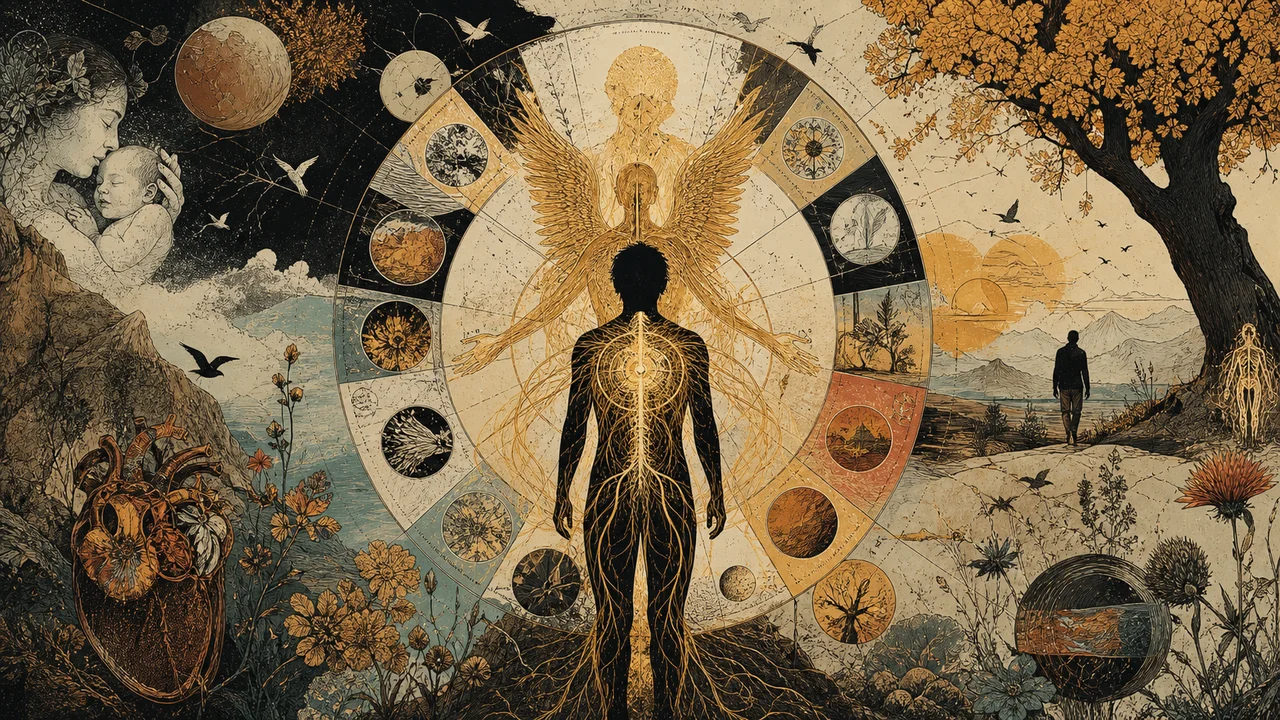
The angel of the physical body is identified through the five-day period that includes the date of birth. It relates to the way we act in the world, our physical constitution, and the main virtue we need to develop throughout life.
In this article, you will understand how the year is divided among the 72 angels, how to locate the correct period, and what this rulership can reveal. You will also learn not to confuse the physical angel with the angel of the heart or the angel of intellect.
Continue reading to discover the method step by step and understand why knowing the angel's name is only the beginning of the work.
The physical angel is the main rulership of action
The physical body allows consciousness to transform intention into experience. Through it, we walk, work, care, build, and face the consequences of our choices. Physical rulership accompanies this field of manifestation.
Each angel expresses a virtue. In the angel of the physical body, this quality points to a central lesson. A person may need to develop initiative, patience, courage, organization, mercy, or another strength required along their path.
This does not mean that the angel controls the body or determines every event. The rulership shows an attunement. The person decides how to use this energy and can express both the virtue and the imbalance connected to it.
The year is divided into 72 periods
The cycle used for the physical angel begins on March 21. From that date onward, the 72 angels govern successive periods, usually consisting of five days.
Vehuiah rules from March 21 to 25. Jeliel governs from March 26 to 30. Sitael rules from March 31 to April 4. The sequence continues through Mumiah, who rules from March 16 to 20 and closes the cycle.
The calendar year begins in January, but the angelic order begins in March. This detail is important. Looking for the first angel on January 1 changes the entire sequence and leads to an incorrect result.
Table: Angel of the physical body by date of birth
| Rulership period | Ruling angel |
|---|---|
| March 21 to 25 | Vehuiah |
| March 26 to 30 | Jeliel |
| March 31 to April 4 | Sitael |
| April 5 to 9 | Elemiah |
| April 10 to 14 | Mahasiah |
| April 15 to 20 | Lelahel |
| April 21 to 25 | Achaiah |
| April 26 to 30 | Cahetel |
| May 1 to 5 | Haziel |
| May 6 to 10 | Aladiah |
| May 11 to 15 | Laoviah |
| May 16 to 20 | Hahaiah |
| May 21 to 25 | Yezalel |
| May 26 to 31 | Mebahel |
| June 1 to 5 | Hariel |
| June 6 to 10 | Hekamiah |
| June 11 to 15 | Lauviah |
| June 16 to 21 | Caliel |
| June 22 to 26 | Leuviah |
| June 27 to July 1 | Pahaliah |
| July 2 to 6 | Nelchael |
| July 7 to 11 | Yeiayel |
| July 12 to 16 | Melahel |
| July 17 to 22 | Haheuiah |
| July 23 to 27 | Nith-Haiah |
| July 28 to August 1 | Haaiah |
| August 2 to 6 | Yerathel |
| August 7 to 12 | Seheiah |
| August 13 to 17 | Reyel |
| August 18 to 22 | Omael |
| August 23 to 28 | Lecabel |
| August 29 to September 2 | Vasariah |
| September 3 to 7 | Yehuiah |
| September 8 to 12 | Lehahiah |
| September 13 to 17 | Chavakiah |
| September 18 to 23 | Menadel |
| September 24 to 28 | Aniel |
| September 29 to October 3 | Haamiah |
| October 4 to 8 | Rehael |
| October 9 to 13 | Yeiazel |
| October 14 to 18 | Hahahel |
| October 19 to 23 | Mikael |
| October 24 to 28 | Veuliah |
| October 29 to November 2 | Yelahiah |
| November 3 to 7 | Sealiah |
| November 8 to 12 | Ariel |
| November 13 to 17 | Asaliah |
| November 18 to 22 | Mihael |
| November 23 to 27 | Vehuel |
| November 28 to December 2 | Daniel |
| December 3 to 7 | Hahasiah |
| December 8 to 12 | Imamiah |
| December 13 to 16 | Nanael |
| December 17 to 21 | Nithael |
| December 22 to 26 | Mebahiah |
| December 27 to 31 | Poyel |
| January 1 to 5 | Nemamiah |
| January 6 to 10 | Yeialel |
| January 11 to 15 | Harahel |
| January 16 to 20 | Mitzrael |
| January 21 to 25 | Umabel |
| January 26 to 30 | Iah-Hel |
| January 31 to February 4 | Anauel |
| February 5 to 9 | Mehiel |
| February 10 to 14 | Damabiah |
| February 15 to 19 | Manakel |
| February 20 to 24 | Eyael |
| February 25 to 29 | Habuhiah |
| March 1 to 5 | Rochel |
| March 6 to 10 | Yabamiah |
| March 11 to 15 | Haiaiel |
| March 16 to 20 | Mumiah |
How to locate the date in the table
The process has three steps:
- Write down the day and month of birth.
- Find this date among the rulership periods.
- Identify the angel who governs the interval.
A person born on April 7 falls within the period from April 5 to 9, governed by Elemiah. Someone born on August 13 falls within the period from August 13 to 17, connected to Omael. A person born on January 3 falls within the period from January 1 to 5, governed by Nemamiah.
It is not necessary to use the year or time for this first rulership. The day and month are sufficient.
What to do with transition days
The periods must be read exactly as they appear in the table. If an angel governs from March 21 to 25, the 25th still belongs to that angel. The next one begins on the 26th.
Some intervals have small differences to account for the number of days in each month. There is also February 29, which must be located in the complete table and should not be adjusted by approximation.
When in doubt, do not choose the angel whose meaning seems more appealing. Confirm the date first. Identification comes from rulership, not preference.
The virtue reveals a life's work
After finding the name, read the essential virtue, the positive aspects, and the shadow of that angel. All three parts are necessary.
The virtue shows the strength that can be developed. The positive aspects reveal how it appears when balanced. The shadow indicates what happens when the same energy is blocked, exaggerated, or used by the ego.
Imagine someone ruled by a force of courage. Balance allows them to face difficulties and protect what is just. Imbalance can turn into aggression or conflict. The mission is not merely to be strong, but to learn how to use strength correctly.
The physical angel does not replace the other rulerships
The date used in the five-day period reveals the angel of the physical body. The angel of the heart follows another table, with nonconsecutive days throughout the year. The angel of intellect depends on the time of birth.
A person may have three different angels. Each one acts in a field: action, emotion, and thought. Together, they form a more complete reading of the experience.
For this reason, do not conclude that your entire path is explained by a single name. Physical rulership presents the material foundation, but life also involves feelings, ideas, and spiritual choices. The complete guide to the 72 Kabbalistic angels shows how the three rulerships relate to the hierarchy and connection practices.
Knowing the angel requires living its quality
Discovering the name can generate enthusiasm. The next step is to observe where the virtue already exists and where it still meets resistance.
Ask yourself: how does this quality appear in my actions? In which situation do I do the opposite? What simple action would allow me to express it today?
The angel offers a frequency. The connection becomes stronger when the body transforms this energy into conduct. This is the work of the physical angel: bringing the virtue closer to the concrete world.
Frequently asked questions
It is the rulership connected to physical constitution, actions in the material world, and the main virtue a person came to develop in this life.
Locate the date of birth in the table of the 72 five-day periods. The angel who governs that interval is the ruler of the physical body.
Not for the angel of the physical body. The time is used to discover the angel of intellect.
No. The personal triad also includes the angel of the heart, connected to emotions, and the angel of intellect, connected to the mind and spirituality.
No. It indicates virtues and challenges that can be worked on. Choices and actions continue to belong to the person.
Discover the Ultimate Guide to the 72 Kabbalistic Angels
Discovering the angel of the physical body helps you recognize the principal virtue that accompanies your actions in the world and your life mission.
In the Ultimate Guide to the 72 Kabbalistic Angels, you will find complete rulership tables, profiles of the 72 angels, their seals, and connection practices.
Explore the Guide to the 72 Kabbalistic Angels
About the author
Prof. Tibério Z has more than 30 years of experience teaching spirituality, metaphysics, holistic therapies and consciousness development.