
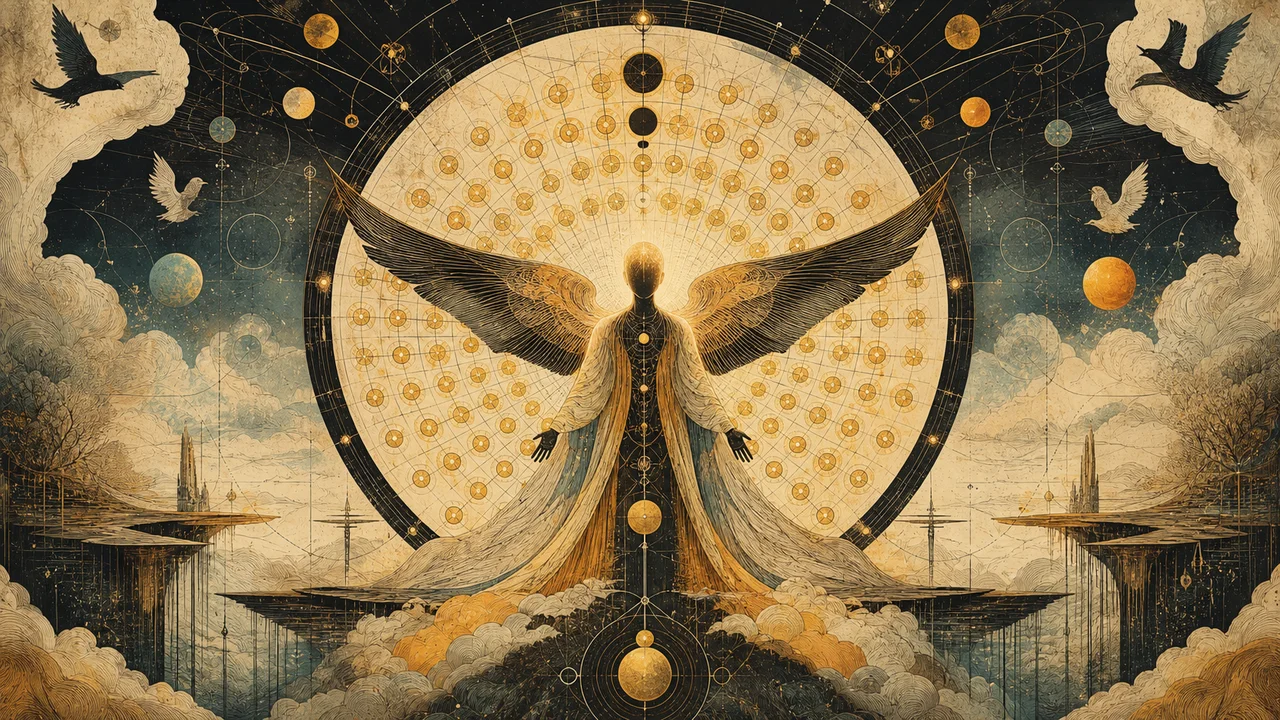
The 72 Kabbalistic angels are spiritual intelligences connected with different divine virtues. Each one represents a quality that can be recognized and developed, such as courage, wisdom, mercy, healing or clarity. They form an organized system of rulerships, choirs and forms of connection.
In this article, you will understand why there are 72 angels, what they represent and how they differ from archangels and from other explanations of angelic beings. You will also see why knowing an angel does not mean handing over responsibility for your own life.
Continue reading to understand the foundation of this knowledge and see how connecting with angels can help transform a spiritual virtue into a concrete attitude.
The 72 angels express divine virtues
The word angel means messenger. An angel conveys a quality of divine consciousness and brings this energy closer to human experience. An angel does not take the place of God or act as a separate deity. Its function is to serve as a channel for a specific force of Creation.
The 72 Kabbalistic angels represent 72 ways in which this force can manifest. One angel may work with initiative, another with forgiveness, and another with intelligence or the ability to complete a cycle. The qualities are different, but they all belong to the same divine source.
We can imagine light passing through a prism. The source is one, yet each band reveals a color. Angels do something similar with virtues. They make a quality clearer so that we can perceive, study and develop it in our lives. The differences between angels, spirit guides and archangels help us understand this spiritual field before entering the Kabbalistic organization.
The number 72 comes from the Shem HaMephorash
The names of the 72 angels are connected with the Shem HaMephorash, known as the Explicit Name of God. Its formation is based on three verses from chapter 14 of Exodus. Each verse contains 72 letters, which are arranged to form 72 combinations of three letters.
These combinations represent aspects of divine power. By adding endings such as “El” or “Yah,” the names associated with the angels emerge. Therefore, the system does not begin with a randomly created list. There is a symbolic structure connecting each name with a virtue.
The complete formation of the names has its own explanation. What matters here is understanding that the 72 angels belong to a Kabbalistic organization. They are not merely names used for requests, but keys to understanding different movements of consciousness.
The angels are organized into nine choirs
The 72 angels are distributed among nine angelic choirs. Each choir contains eight angels and has a function within the hierarchy: Seraphim, Cherubim, Thrones, Dominions, Virtues, Powers, Principalities, Archangels and Angels.
The nine choirs form three triads. The first remains closer to divine contemplation. The second organizes and governs the forces of Creation. The third acts more directly in transmitting orders and in contact with humanity.
Each choir has a ruling archangel. Metatron governs the Seraphim, Raziel the Cherubim, and so on, through Gabriel, who is connected with the choir of Angels. This structure helps explain why angels and archangels do not have the same function, even when they work together.
Kabbalistic angels and archangels have different functions
Archangels represent broad forces. Michael is connected with protection and faith. Raphael works with healing and balance. Gabriel works with communication and revelation. Each one directs a choir and organizes a broader field of activity.
The 72 angels have more specific areas of activity. Within the choir governed by an archangel, each angel has a virtue, a rulership and a distinct form of connection. The archangel sustains the general field; the eight angels in the choir manifest different aspects of that energy.
This difference prevents a common confusion. Knowing the archangel of a choir does not replace studying the Kabbalistic angel. Likewise, discovering your personal angel does not eliminate the possibility of seeking the strength of an archangel or another angel when there is a just need.
Personal rulership considers three angels
The Kabbalistic system does not work only with the idea of a single guardian angel for an entire lifetime. It identifies three main influences connected with birth.
The angel of the physical body is found through the five-day period that includes the date of birth. It relates to action in the world, physical constitution and the main virtue the person came to develop.
The angel of the heart is identified through a table of specific dates and works with emotions, feelings and relationships. The angel of the intellect is found through the time of birth, divided into twenty-minute periods, and relates to thought, creativity and spiritual mission.
Table: The three personal rulerships
| Rulership | How to identify it | Primary field |
|---|---|---|
| Physical body | The period containing the date of birth | Action, body and material mission |
| Heart | Five specific dates throughout the year | Emotions, feelings and bonds |
| Intellect | The twenty-minute interval of birth | Thought, creativity and spirituality |
These three rulerships do not determine everything a person will be. They show tendencies and qualities that can be developed. Consciousness remains responsible for its choices.
The connection must transform the way we live
Learning an angel's name may awaken curiosity, but the study truly begins when we observe its virtue. If the angel represents courage, the connection must help us act courageously. If it represents forgiveness, we need to recognize where resentment still controls our decisions.
Prayers, psalms, colors, incense, times and seals help focus the mind. They work as points of attunement. No object replaces intention, and no ritual produces change when a person continues acting against the quality they asked to develop.
Connecting with angels does not take away our free will. It offers energy, direction and understanding. The choice to walk through the door remains ours. The complete guide to the 72 Kabbalistic angels brings together the subjects that deepen this study, from personal rulerships to connection practices.
Frequently Asked Questions
They are 72 angelic intelligences connected with the Shem HaMephorash. Each angel expresses a specific divine virtue and acts as a channel between human consciousness and that spiritual quality.
No. The 72 angels have specific functions and periods of rulership. Archangels perform broader functions and, in the system presented here, each one governs one of the nine angelic choirs.
Kabbalistic rulership considers three main influences: the angel of the physical body, the angel of the heart and the angel of the intellect. They are identified by the date and time of birth.
Yes. An affinity with one's personal angel facilitates study, but anyone may seek the virtue of another angel when their intention is aligned with that divine quality.
This knowledge helps us recognize virtues, challenges and qualities that can be developed. The connection must appear in choices and attitudes, not only in requests or rituals.
Explore the Ultimate Guide to the 72 Kabbalistic Angels
Understanding what the 72 angels are is the first step toward studying their virtues, rulerships and forms of connection.
In the Ultimate Guide to the 72 Kabbalistic Angels, you will find profiles of the 72 angels, their seals, correspondences and practices organized in a complete e-book.
Explore the guide to the Kabbalistic angels
About the author
Prof. Tibério Z has more than 30 years of experience teaching spirituality, metaphysics, holistic therapies and consciousness development.