What limiting beliefs are and how they form is an important question because many decisions in life do not arise from conscious choices, but from ideas repeated for years until they seem true.
In this article, you will understand what limiting beliefs are, why they act as mental filters and are not good or bad in themselves, and how they form during childhood through repetition and the influence of our environment.
Continue reading to recognize the origin of your own beliefs before trying to change them.
What are limiting beliefs?
Limiting beliefs are learned ideas that reduce our perception of possibility. They make a person believe that something is not for them, that they do not deserve it, that they cannot do it or that a certain path will always bring suffering.
These beliefs do not need to appear as long thoughts. They often emerge as quick phrases, automatic reactions or feelings of discomfort when an opportunity appears. This theme also arises in the study of co-creation and prosperity because old beliefs can directly interfere with the way a person handles money, work and growth.
The problem is that a person begins to act according to the belief. If they believe that money brings problems, they tend to avoid financial growth. If they believe they lack ability, they abandon paths before testing their real possibilities.
Beliefs act as mental filters
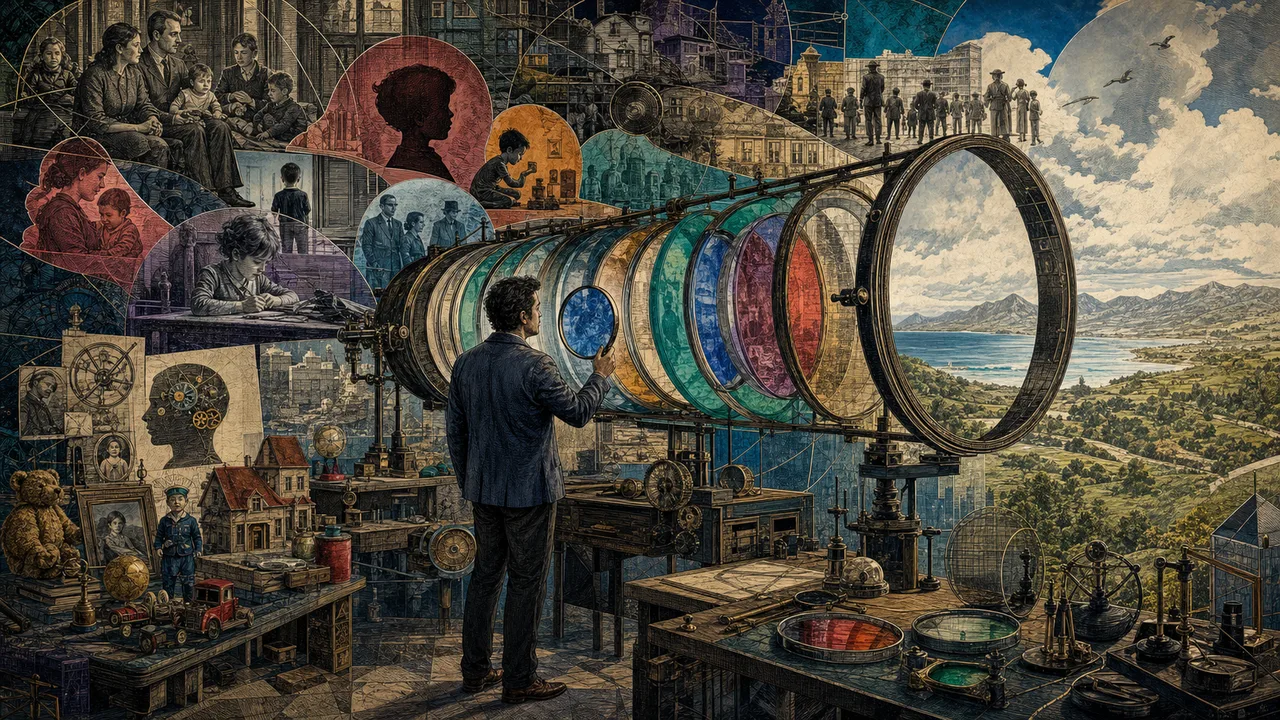
A belief does not show us the whole reality. It filters reality. A person begins to see facts, people and opportunities through what they learned to regard as true.
When the filter is limited, interpretation also becomes limited. A chance to grow may be seen as a threat. Charging a fair price may be felt as guilt. An opportunity may be interpreted as a risk.
This is why two people can experience similar situations and make completely different decisions. What changes is not only the external fact, but the belief used to interpret that fact.
Beliefs are not good or bad in themselves
A belief does not need to be treated as an enemy. Some beliefs organize our lives, protect us and help us make decisions more carefully.
The problem arises when an old belief continues to command choices that no longer serve us. What once seemed like protection can turn into a block.
The work, therefore, is not to deny everything we believe. It is to observe which beliefs still help us and which merely sustain fear, repetition and distance from our own goals.
How do beliefs begin in childhood?
Many beliefs begin in the family environment. A child observes the words, attitudes, emotions and behaviors of nearby adults even without fully understanding what is happening.
Repeated phrases about money, work, wealthy people, hardship, deserving and success become recorded as internal references. Over time, these ideas stop seeming like opinions and begin to seem like truths.
A child does not analyze everything rationally. They learn through repetition, coexistence and emotional impact. What is experienced many times at home creates a foundation for future decisions.
The role of observation and repetition
Repetition strengthens a belief. When an idea is heard many times, it begins to occupy a fixed place in the mind. A person starts responding to life from that idea without realizing it.
This also happens through observation. If a child sees adults suffering over money, arguing about money or speaking badly about those who prosper, they may associate money with tension, conflict or danger.
Later, in adult life, the person may want prosperity and still feel uncomfortable when they begin to grow. The old belief remains active even though the conscious desire is different.
How difficult experiences create inner protection
When a person lives through repeated experiences of hardship, the mind learns to avoid similar situations. This movement has a protective function because it tries to prevent the pain from happening again.
The problem is that this protection may remain active even after reality has changed. A person avoids present opportunities because they resemble something difficult experienced in the past.
A limiting belief can therefore arise from an attempt at defense. It does not appear to destroy the person, but to protect them from something interpreted as a threat. Even so, when it is not reviewed, it limits growth and choice.
The influence of the social environment
In addition to family, the social environment also forms beliefs. The place where a person is born, the conditions they observe, the stories they hear and the examples they receive influence what they believe is possible.
When someone grows up in an environment where no one prospers, studies or fulfills certain dreams, they may conclude that these paths do not belong to their reality. The external limit becomes an internal limit.
This pattern reduces permission to dream. A person does not abandon a goal only because they lack ability, but because they have never seen that goal as a concrete possibility for themselves.
How beliefs affect money, work and choices
Limiting beliefs influence practical areas of life. With money, they may cause a person to associate prosperity with guilt, conflict, falsehood, exploitation or loss of peace.
At work, they may lead someone to accept less than they deserve, fail to charge for what they do, avoid growth or remain in a role that does not match their calling.
In personal choices, these beliefs reduce movement. A person thinks they are deciding freely, but often they are simply obeying old programming that has never been questioned.
How to begin observing limiting beliefs
The first step is to observe thoughts, reactions and inner phrases. Whenever a subject related to money, work, success or deserving appears, notice the first response that arises.
This first reaction usually reveals a great deal. Before rational analysis, the old programming appears. It may be fear, guilt, criticism, rejection, distrust or a feeling that this is not for you.
Change begins when a person stops automatically identifying with these ideas. By noticing the belief at work, they create space to question it, choose more wisely and build new internal references.
Recognizing the belief creates room for choice
A limiting belief loses strength when it is no longer confused with absolute truth. As long as a person believes that the idea is reality, they continue to obey the same filter.
When they see how the belief was formed, a healthy distance appears. The person understands that many current reactions were learned at another time, in another context and with a different capacity for understanding.
This awareness does not change everything at once, but it opens a path. From there, it becomes easier to question old limits, try new attitudes and build a more conscious relationship with money, work and prosperity.
Frequently Asked Questions
Limiting beliefs are learned ideas that reduce our perception of possibility and make a person act as if certain paths were not possible for them.
They form through repeated words, experiences, emotions and examples observed in the family, during childhood and in the social environment.
No. Some beliefs organize and protect life. The problem appears when an old belief continues to command choices that no longer serve us.
Observe automatic reactions to money, work, success and deserving. Fear, guilt, criticism or immediate rejection may indicate an active belief.
Deepen your relationship with prosperity and abundance
Observing limiting beliefs helps us understand why some choices repeat even when a person wants to change.
The e-book Mental Code of Prosperity helps you recognize limiting patterns and build a more conscious relationship with money, choices and growth.
Discover the e-book
About the author
Prof. Tibério Z has more than 30 years of experience teaching spirituality, metaphysics, holistic therapies and consciousness development.