
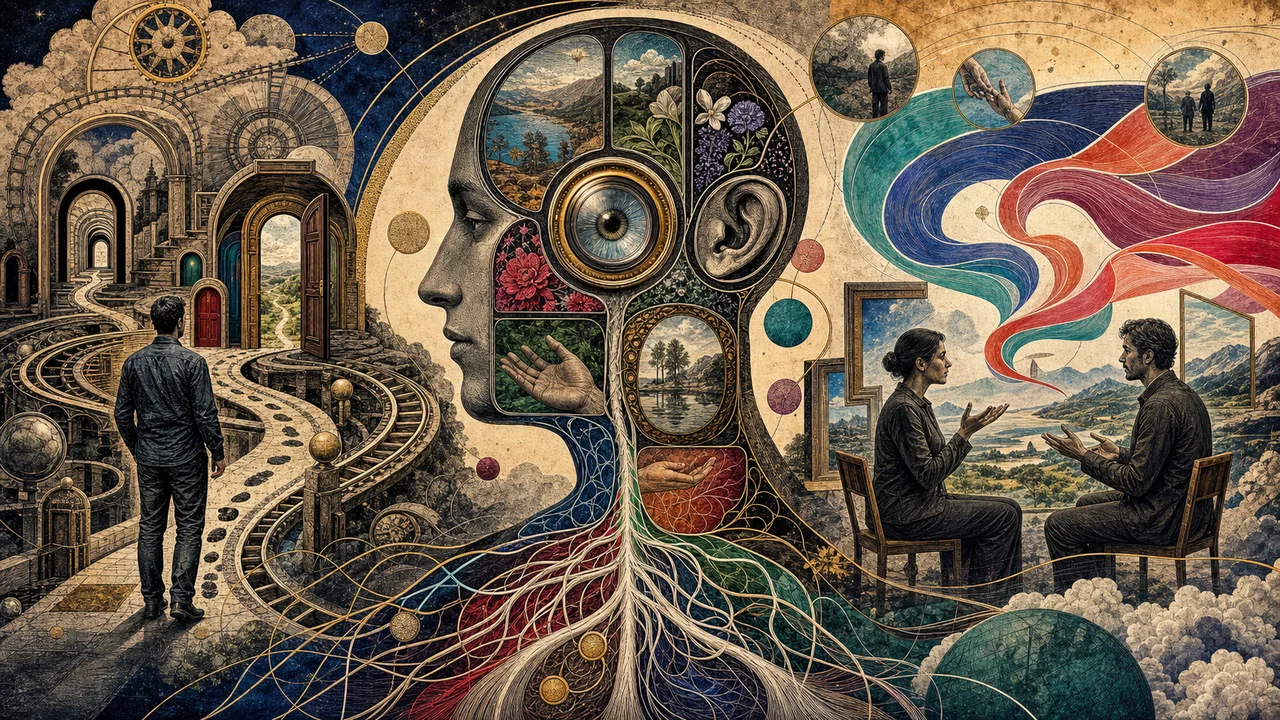
Neuro-Linguistic Programming is the name given to the study of the relationship among learned patterns, the functioning of the nervous system, and the language used to organize experience. This article explores one of the foundations presented in the complete NLP guide in greater depth.
In this article, you will understand the meaning of each part of the term—programming, neuro, and linguistic—the relationship among these three elements, how mental patterns are learned, and how the senses encode experience.
Continue reading to follow this breakdown and understand what the name really describes.
The Meaning of the Word Programming
In NLP, programming represents the mental and behavioral patterns learned throughout life. A person is born with some basic responses, but much of their way of thinking, feeling, and acting is constructed through experiences.
These patterns are learned through repetition. When a reaction is used repeatedly in similar situations, it begins to happen automatically, without the need to consciously choose each step.
The word programming does not mean that a human being functions rigidly like a machine. It indicates that there are learned sequences that can be recognized, analyzed, and changed when they stop producing suitable results.
The Meaning of the Term Neuro
The term neuro is related to the nervous system and the way experience is received and processed. Everything a person knows about the world arrives through the senses and is transformed into internal information.
Sight records images, shapes, and movements. Hearing perceives sounds and words. Touch recognizes pressure, temperature, and contact. Smell and taste also participate in the construction of memories and emotional responses.
The brain organizes this information and creates a representation of what happened. The person does not retain the complete event, but a version formed by the elements they perceived, selected, and interpreted.
The Meaning of the Word Linguistic
Linguistic represents the role of language in organizing experience. Words are used to name events, explain emotions, create meanings, and communicate what a person thinks.
Language does not describe reality in a completely neutral way. When someone chooses certain words, they also reveal how they interpreted the situation and which parts of the experience received greater importance.
Saying “I made a mistake” creates a different organization from saying “I am a failure.” In the first sentence, the person describes a specific action. In the second, they turn one event into a complete definition of their identity.
The Relationship Among Programming, the Nervous System, and Language
The three terms do not function separately. An experience is perceived through the senses, organized by the nervous system, interpreted by the mind, and transformed into language, emotion, and behavior.
When this sequence is repeated, programming is formed. The person begins to use the same interpretation and the same response whenever they encounter something similar to the original situation.
Neuro-Linguistic Programming studies precisely this relationship. Its goal is to understand how thought patterns influence behaviors and how this structure can be reorganized in a practical way.
How Mental Patterns Are Learned
Patterns begin to form in childhood. A person observes adults, receives guidance, lives through experiences, and learns which behaviors are accepted, dangerous, valued, or rejected in their environment.
Some learning occurs consciously, such as studying how to perform a task. Other lessons are absorbed without analysis through repeated phrases, family reactions, cultural values, and interpretations presented as truths.
Over time, this content becomes part of the mental map. Beliefs, memories, experiences, values, and cultural programming begin to influence how a person perceives and responds to the world.
How the Senses Encode Experience
The mind represents experiences through images, sounds, sensations, smells, and tastes. Even after an event has ended, these elements can be reconstructed internally and produce new responses.
When remembering an argument, for example, a person may visualize the other person's face, mentally hear certain words, and once again feel tension in the body. The memory is a sensory encoding of what was experienced.
The way this representation is organized influences its intensity. Large images, loud sounds, and concentrated sensations can increase a reaction, while changes in these characteristics can alter the internal experience.
How Language Reinforces Internal Patterns
Words repeated internally help maintain certain programming. When a person says every day that they cannot do something, that everything is difficult, or that no one respects them, this language directs their attention toward information that confirms these conclusions.
Repetition turns interpretations into certainties. The person begins to ignore experiences that contradict their belief and values only the events that are compatible with what they already think.
Language also influences actions. Someone who believes they are incapable may avoid trying, quickly abandon a task, or interpret any difficulty as proof that their conclusion was correct.
How Language Can Reorganize Perception
Changing language does not mean repeating positive phrases without believing them. The work begins by making words more specific and separating real events from generalized conclusions.
When someone says, “I always do everything wrong,” they can investigate what really happened, in which situation it occurred, which behavior did not work, and what could be done differently.
This precision expands the mental map. Instead of reinforcing a negative identity, the person recognizes a specific experience, identifies what can be learned, and creates space for new responses.
The Practical Meaning of Neuro-Linguistic Programming
In practice, Neuro-Linguistic Programming means understanding how an experience is created internally. The person observes what they imagine, what they say to themselves, what they feel, and which behavior emerges from this sequence.
By recognizing this functioning, it becomes possible to interrupt automatic responses. Change does not occur only because the person wants to act differently, but because they modify the elements that produce the previous behavior.
NLP therefore represents the study and reorganization of the relationship among mind, language, and behavior. Its foundations can be used in personal development, communication, and consultations, provided that the techniques are understood and applied responsibly.
Frequently Asked Questions
It means the study of the relationship among learned patterns, nervous system functioning, sensory experience, language, and behavior.
Programming represents the mental and behavioral patterns learned through repetition throughout life.
Neuro indicates the participation of the nervous system and the senses in how a person perceives, organizes, and responds to experiences.
Linguistic shows how words help name experiences, create meanings, and influence thoughts, emotions, and behaviors.
No. It indicates that there are learned sequences that can be recognized, analyzed, and changed when they stop producing good results.
Continue exploring NLP in depth
After understanding the meaning of Neuro-Linguistic Programming, it becomes easier to study its models without treating NLP as a disconnected set of techniques.
The NLP for Beginners e-book organizes these concepts in a clear sequence for those who want to study the method in depth and apply its resources responsibly.
Discover the NLP e-book
About the author
Prof. Tibério Z has more than 30 years of experience teaching spirituality, metaphysics, holistic therapies and consciousness development.