
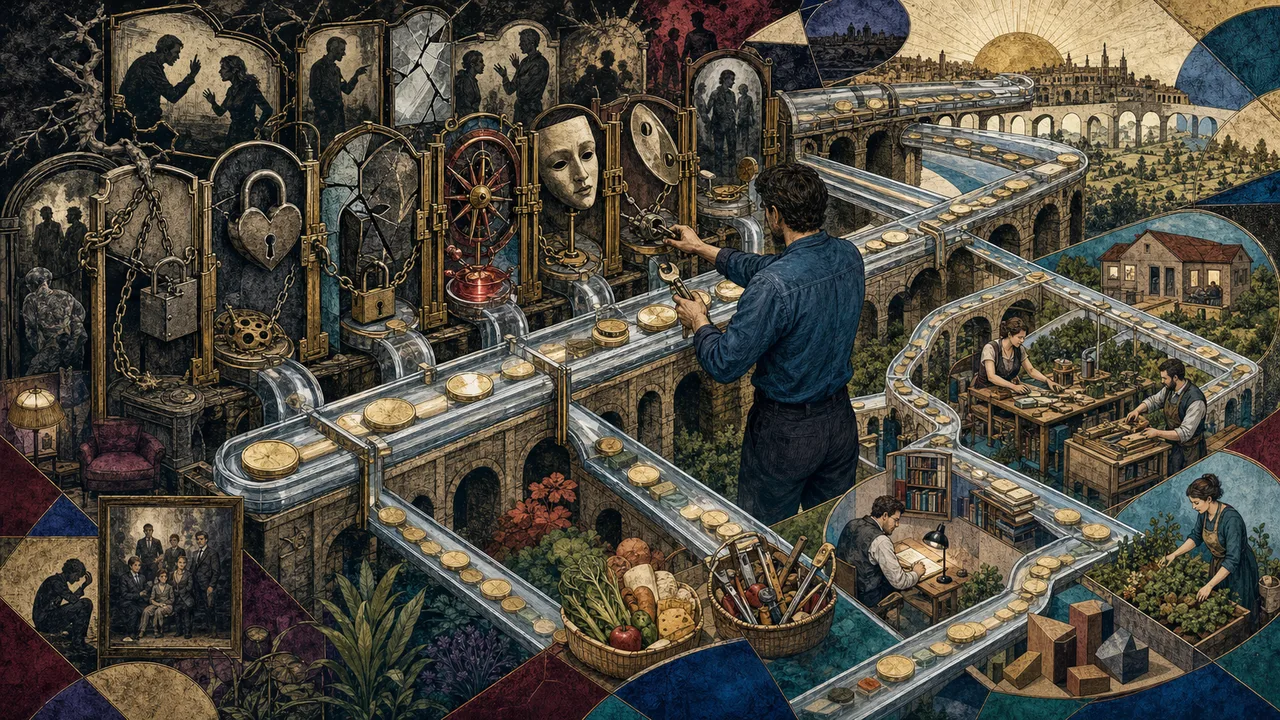
Which beliefs about money block prosperity is an important question because many people want to grow financially but carry inner ideas that reject money itself.
In this article, you will understand the most common beliefs about money, such as the ideas that it is dirty, causes unhappiness, changes people or steals peace, as well as the silent belief that we do not deserve it.
Continue reading to identify which of these beliefs still operate within you and how they were learned.
The belief that money is dirty
The belief that money is dirty makes a person associate financial resources with something negative. This idea often comes from family phrases, social judgments and repeated stories about wealthy people as if all of them were dishonest.
When this association is active, the mind starts treating money as something dangerous or inappropriate. A person may want to prosper but feel uncomfortable when they begin earning more or need to handle larger amounts. This theme also appears in the study of co-creation and prosperity because prosperity requires us to review the inner associations that block receiving.
Money itself has no moral value. It is simply a means of exchange. It can be used to support families, create jobs, study, take care of health or develop useful projects. The problem is not money but the intention of the person using it.
The belief that money causes unhappiness
Many people believe that money causes unhappiness and that a lack of resources is connected to simplicity, purity or joy. This belief creates confusion among spirituality, suffering and material life.
In practice, poverty does not create happiness. A lack of money brings worry, limitation, insecurity and difficulty meeting basic needs. Constant scarcity does not automatically make anyone more conscious.
Money can amplify conflict in unbalanced people, but it can also expand possibilities for conscious people. It can offer security, education, care and freedom. The decisive factor is not the resource but how a person relates to it.
The belief that money only causes conflict
The idea that money only causes conflict makes a person associate prosperity with discord. Someone who grows up hearing that money destroys families, separates people or causes disputes may begin rejecting financial growth as a form of protection.
This belief creates a dangerous inner logic. The person begins to believe that having no money is better than risking conflict with someone. Scarcity then starts to seem safer than prosperity.
But money does not create conflict on its own. Conflicts arise from unresolved interests, lack of ethics, attempts to take advantage and the absence of clear agreements. Money merely reveals human behaviors that were already present.
The belief that money is the evil of the world
The belief that money is the evil of the world shifts responsibility for human actions onto an object. Instead of observing choices, values and behaviors, a person blames money for social problems.
This idea prevents a more conscious analysis. Violence, exploitation, corruption and inequality do not arise from money itself. They arise from human decisions, poorly managed systems and a lack of responsibility.
The same money that can be used to exploit can also support education, health, work, food, social projects and a better life. The resource does not choose the path. The consciousness of the person using it always makes that choice.
The belief that money changes people
Many people say they do not want to have money because they do not want to change. Deep down, this belief arises from the fear that resources will reveal inner aspects that are difficult to face, such as control, vanity or a need for superiority.
Money does not turn someone into something they never were. It expands their ability to choose and allows inner contents to appear more strongly. Someone who already wants to dominate can use money to dominate. Someone who already wants to help can use money to help more.
Avoiding money therefore does not resolve inner conflicts. It only prevents a person from facing their own relationship with power, choice and responsibility. Consciousness makes it possible to use resources without being controlled by them.
The belief that money steals peace
The belief that money steals peace comes from the idea that having resources brings worry, overwork and loss of tranquility. A person then begins to associate prosperity with a burden.
But a lack of money also steals peace. Not knowing whether there will be food, housing, medicine or basic conditions in the following month creates constant fear. Scarcity keeps a person in a state of survival.
The problem is not having money but living without balance. Resources used well can bring organization, security and freedom. Peace does not come from poverty but from a more conscious relationship with life and material choices.
The belief that I deserve nothing
The belief that I deserve nothing blocks prosperity because it directly affects a person's relationship with receiving. They work, make an effort and help, but they feel they should not receive more.
This belief may appear as guilt when charging, difficulty accepting praise, fear of growth or a tendency to always put oneself last. The person gives but does not allow life to return anything as recognition, money or opportunity.
When someone believes they do not deserve, they begin sabotaging their own growth. They may reject invitations, charge too little, accept unfair relationships or remain in situations smaller than their real ability allows.
The belief that money attracts falsehood and self-interest
Another common belief is that money attracts falsehood, self-interested people and relationships without truth. A person then begins to see prosperity as a threat to emotional bonds.
This fear may lead someone to reject growth so they will not be used, judged or sought only for what they possess. The mind creates a form of protection: if I have no money, no one will approach me out of self-interest.
But self-interested relationships are not created by money. Money merely makes people's intentions more visible. The answer is not to reject prosperity but to develop discernment, boundaries and clearer relationships.
The belief that prosperity is a headache
The belief that prosperity is a headache makes a person associate growth with problems. Earning more begins to mean more demands, more responsibility, more exposure and more risk.
With this idea active, a person may avoid opportunities precisely when they begin to move forward. Growth seems dangerous. Remaining with what is familiar seems more comfortable even if the familiar is limiting.
Prosperity requires responsibility, but this does not mean suffering. Growth asks for maturity, organization and consciousness. When a person develops an inner structure, prosperity stops being a burden and becomes a possibility for living with greater choice, usefulness and balance.
Money needs to be understood more consciously
Beliefs about money do not disappear simply because a person wants to prosper. They need to be observed in how they appear in choices, emotional reactions and the way a person deals with receiving, charging, saving and growing.
When money is no longer seen as an enemy, it can return to its proper place: a tool for exchange, choice, care and construction in the material world.
Prosperity becomes more possible when a person separates the resource from the old stories learned about it. From this separation, it becomes easier to act with balance, responsibility and openness to receiving fairly.
Frequently Asked Questions
The most common ones associate money with dirt, conflict, unhappiness, falsehood, guilt, loss of peace or a lack of deserving.
Because they influence practical decisions. These internal associations may lead a person to avoid charging, growing, receiving, saving money or accepting opportunities.
Money expands choices and can reveal inner contents, but it does not create character, ethics or intention by itself. A person's consciousness determines how the resource is used.
The first step is to notice which reactions appear when charging, growing, receiving and succeeding. Then the old association must be questioned and action taken with greater awareness.
Deepen your relationship with prosperity and abundance
Beliefs about money shape decisions, choices and limits that often seem natural.
The e-book Mental Code of Prosperity helps you recognize limiting patterns and build a more conscious relationship with money, choices and growth.
Discover the e-book
About the author
Prof. Tibério Z has more than 30 years of experience teaching spirituality, metaphysics, holistic therapies and consciousness development.