
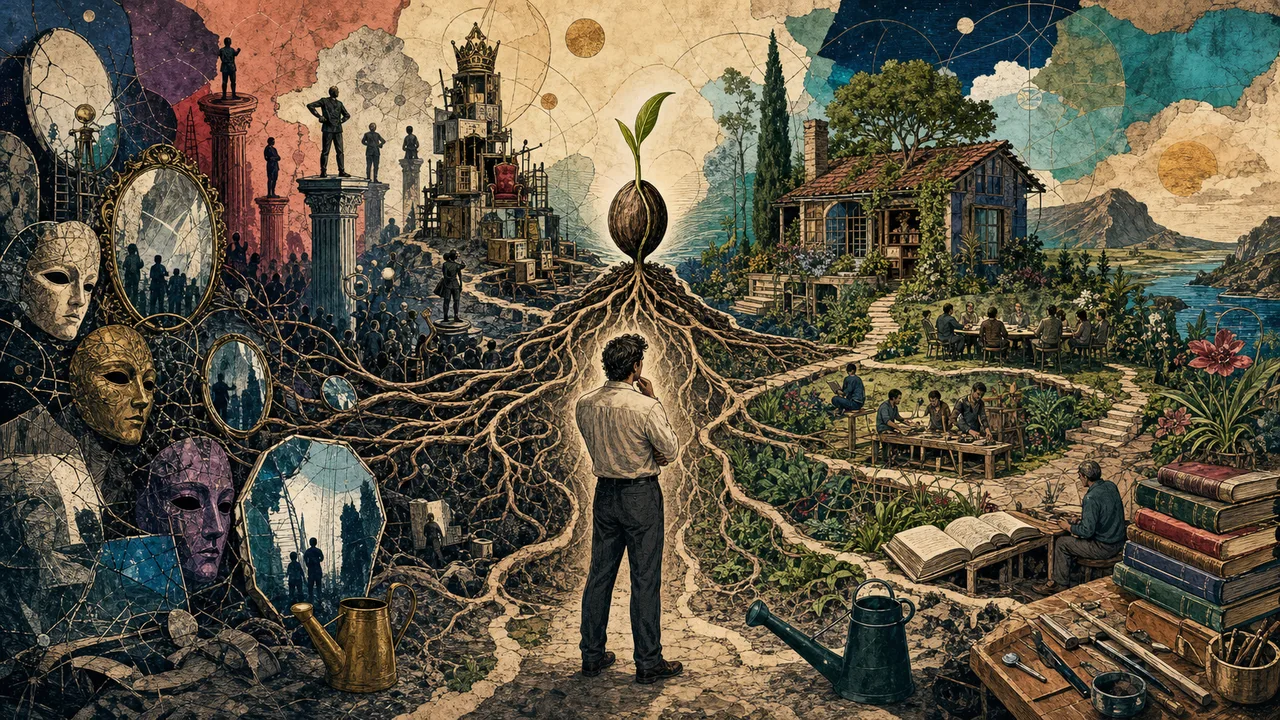
The difference between the desires of the ego and the desires of the Divine is a central question for understanding prosperity, money and co-creation without falling into superficial explanations.
In this article, you will understand why desire itself is not the problem, which central question we should ask when facing it and what distinguishes a desire born from the ego from one born from a deeper consciousness.
Continue reading to observe your own desires with greater honesty and less judgment.
Desire is not the problem
Desire is part of the human experience. A person desires because they live, feel, compare, learn, suffer, observe possibilities and realize that they can change something in their reality.
Denying every desire does not solve the problem. Often, denial merely hides wishes that continue to act within us. A person believes they have overcome a desire, but it appears as envy, frustration, judgment or a feeling of lack.
The path, therefore, is not to condemn desire. The path is to understand its source. Desire can be a force for growth, but it can also express neediness, competition and the need for recognition.
The central question is who is desiring
Before judging a desire as good or bad, we need to ask who is desiring. The same object can have completely different meanings depending on the inner part that sustains the desire.
One person may want money to study, improve their home, care for their family and help other people. Another may want money only to feel superior, control situations or prove that they are worth more than others.
The external desire looks the same, but its inner source is different. The main question is therefore not only what I want, but who within me wants it and what this desire will be used for. This point deepens our study of co-creation and prosperity because intention changes how a person participates in their own reality.
What are the desires of the ego?
The desires of the ego arise from everyday identity, personality, personal image and comparison with others. The ego desires in order to affirm its importance in the world.
When the ego directs desire, it seeks status, power, control, external validation and superiority. The desired object becomes a symbol. It is not merely a house, a car or an amount of money; it becomes a way to prove one's value.
This kind of desire usually creates tension. Even when a person achieves what they wanted, satisfaction lasts only a short time. Soon another target, another comparison and another need to show that they have achieved more appears.
What are the desires of the Divine?
The desires of the Divine arise from a deeper consciousness. They do not seek only appearance, competition or external recognition. They seek well-being, balance, learning, a better life and collective benefit.
When a desire comes from the Divine, it can involve money, comfort and material achievements. The difference lies in the reason. A person does not desire simply to show off, but to live better, study more, take better care of their family and contribute in some way.
The Divine does not desire to feed competition. It desires to expand possibilities. Desire becomes a tool for development, service and building a more coherent life.
The ego desires to prove its value
The ego feels incomplete and tries to compensate for this lack through external achievements. It believes that by possessing more, it will be more respected, admired or feared.
The ego therefore uses money and possessions as symbols of importance. It needs to display, compare, control and assert its position. The achievement stops being functional and begins serving an image.
The problem is that this feeling is never completed. There will always be someone with more money, power, recognition or influence. The ego's desire never rests because comparison is its foundation.
The Divine desires to improve life
The Divine does not reject the material world. It understands that this life has practical needs. Housing, food, education, health, work and money are part of the human experience.
A desire aligned with the Divine can therefore seek comfort and prosperity. The point is that this comfort does not serve only to feed vanity. It allows greater balance, freedom, learning and capacity for action.
When the Divine directs desire, a person does not need to prove anything. They seek what truly improves life. The focus is on the function of the achievement, not the appearance it produces.
The same desire can arise from different sources
Two people may want the same car. For one, the car may represent safety, transportation, work and comfort for the family. For the other, it may represent superiority, ostentation and the need to be seen.
The same happens with money. One person may want money to create useful projects, take better care of their health and study. Another may want money to control people, maintain an image and feed disputes.
The object therefore does not reveal everything. We need to investigate the motivation. Desire becomes clearer when a person asks what they intend to do with what they seek and which inner need they are trying to meet.
The results of the desires of the ego and the Divine
The desires of the ego tend to create haste. The ego wants everything immediately without considering whether there is enough structure to sustain the achievement. It wants to possess something now even if this creates difficulties later.
This movement can create debt, anxiety, overwork and dissatisfaction. A person achieves something but then lives under pressure to maintain an image or sustain a choice that did not arise from balance.
The desires of the Divine follow another rhythm. They appear more gradually, allowing a person to develop the structure needed to handle what they are achieving. The result tends to be more stable because it grows together with consciousness.
How to observe the source of a desire
To observe the source of a desire, we need to look at the real motivation. Ask why you want it, what you expect to feel after achieving it and how the desire will be used in your life.
When the answer involves comparison, superiority, revenge, a need for approval or fear of appearing smaller than others, the ego is probably directing the process.
When the answer involves balance, a better life, learning, care, contribution and the conscious use of the achievement, the desire is closer to the Divine. Money is not the problem. Desire is not the problem either. The decisive factor is who desires and who chooses.
Conscious desire unites growth and responsibility
Distinguishing desires of the ego from desires of the Divine does not serve to condemn material life. It serves to bring awareness to what a person seeks and how they intend to use what they achieve.
When desire arises only from comparison, it tends to create greater dependence. When it comes from a deeper consciousness, it can organize choices, strengthen responsibility and expand real possibilities in life.
Co-creation begins to mature when a person stops asking only what they want to receive and begins asking which kind of consciousness is directing that desire. This question changes the path even before the result appears.
Frequently Asked Questions
No. Some desires arise from the ego and are connected to comparison and validation. Others arise from a deeper consciousness directed toward balance, growth and contribution.
Not necessarily. Money can be desired for vanity and control, but it can also be sought to provide security, education, care and better living conditions.
Observe whether it arises from comparison, haste, a need for approval or superiority, or fear of appearing smaller than other people.
It is usually connected to a real improvement in life, balance, learning, care, contribution and the conscious use of what will be achieved.
Deepen your relationship with prosperity and abundance
Distinguishing desires of the ego from desires of the Divine helps us understand why not every wish strengthens life. The source of desire changes how a person seeks, uses and sustains what they achieve.
The e-book Mental Code of Prosperity helps you recognize limiting patterns and build a more conscious relationship with money, choices and growth.
Discover the e-book
About the author
Prof. Tibério Z has more than 30 years of experience teaching spirituality, metaphysics, holistic therapies and consciousness development.