
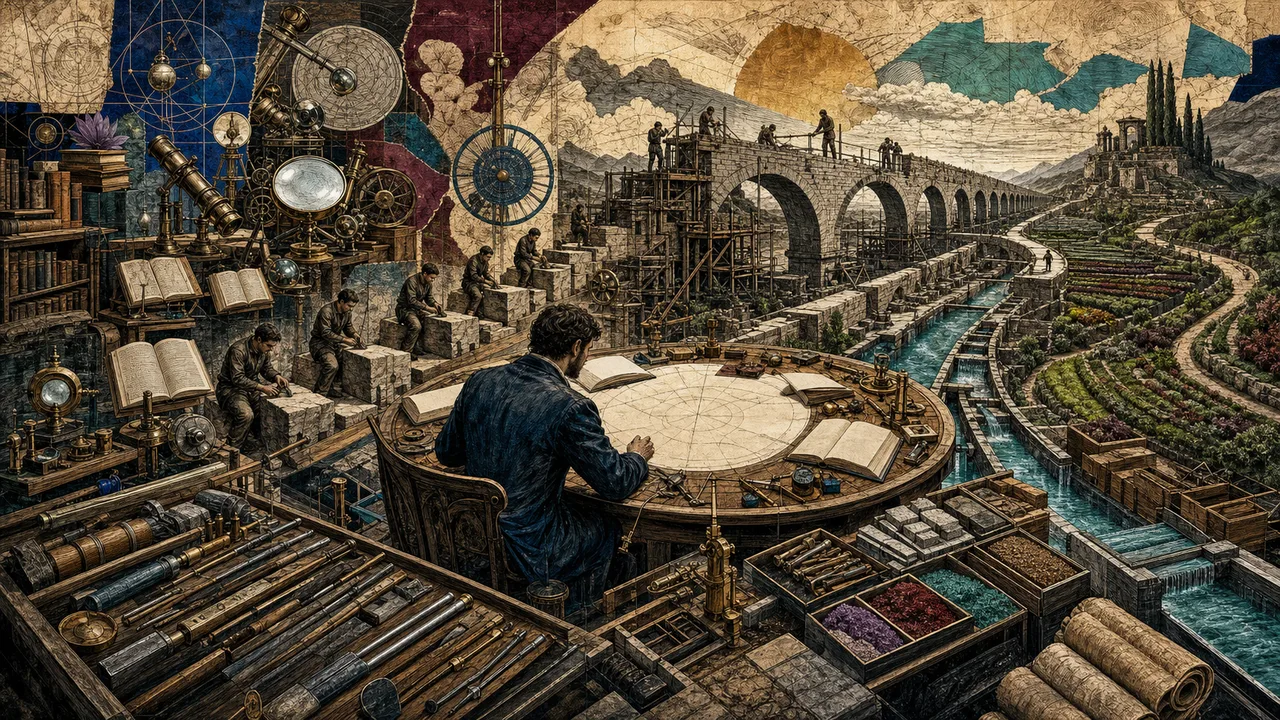
How discipline, knowledge and organization sustain results is an essential question because many people want to prosper but cannot maintain continuity in what they begin.
In this article, you will understand why desire needs structure, how discipline maintains movement, how a lack of knowledge generates self-sabotage and why disorganization consumes time and money.
Continue reading to see how these three elements sustain lasting results.
Desire needs structure
Wanting a result is important, but desire does not accomplish everything on its own. It shows a direction but must be sustained by concrete actions.
Many people begin enthusiastically. They make plans, imagine changes, visualize achievements and feel motivated to transform their lives. Yet when the routine requires continuity, they lose momentum. This point also appears in the study of co-creation and prosperity because intention without practice does not sustain real change.
Structure enters at this point. Discipline, knowledge and organization transform desire into a path. Without these elements, intention remains loose and rarely reaches a stable result.
Discipline maintains movement
Discipline is the ability to continue doing what needs to be done even when motivation decreases. It does not depend only on willpower or excitement.
Anyone who waits to feel motivated every day eventually stops. Life changes, moods change, problems arise and the person abandons what they began because they did not create consistency.
Discipline sustains the process. It makes it possible to study, work, organize money, correct mistakes and repeat important actions until they produce a real effect.
A lack of discipline interrupts results
A lack of discipline causes people to start many things and finish few. Each new idea looks promising, but none receives enough time to mature.
This behavior creates a sense of failure. A person believes that nothing works, but often the problem is not the chosen path. The problem is constant interruption.
Results require continuity. When a person gives up too early, they do not allow their own effort to form a foundation. Prosperity requires persistence, not merely an initial impulse.
Knowledge prevents repeated mistakes
Knowledge makes it possible to better understand what one is doing. Without it, a person acts through trial and error, improvisation, fear or repetition of old patterns.
In financial life, this appears when someone does not understand their own money, does not know how to control spending, charge for their work, evaluate choices or perceive the consequences of their decisions.
Those who learn reduce mistakes. Knowledge does not eliminate every problem, but it provides greater clarity for deciding, correcting and acting with less confusion.
A lack of knowledge generates self-sabotage
Self-sabotage is often born from ignorance. A person does not know how to organize their own life but interprets their results as bad luck, injustice or personal incapacity.
Without knowledge, they repeat the same actions while expecting different results. They spend without noticing, work without improving, accept poor conditions and avoid seeking guidance when they need it.
When a person begins to learn, they realize that many blockages were not destiny. They were consequences of decisions made without preparation, clarity or observation.
Organization gives energy direction
Organization prevents energy from scattering. Without organization, a person works hard and becomes very tired but cannot turn effort into something constructed.
This happens because everything becomes mixed together. Time, money, priorities, commitments and tasks accumulate without order. The person lives putting out emergencies and cannot advance what truly matters.
Organizing does not mean controlling everything rigidly. It means knowing what needs to be done, when it will be done and which priority should receive attention first.
Disorganization consumes time and money
Disorganization causes silent losses. A person pays late, forgets commitments, buys without planning, misses deadlines and makes decisions under the pressure of urgency.
These small failures accumulate. Money disappears without clear awareness. Time is spent on corrections. Energy that could build something new is used to fix avoidable problems.
Organization therefore sustains prosperity. It creates a more favorable environment for conscious choices, financial control, better work and continuity in projects.
Discipline, knowledge and organization work together
Discipline without knowledge may become misdirected effort. A person dedicates themselves but insists on paths that do not produce results because they do not understand what must be adjusted.
Knowledge without discipline is also insufficient. A person knows what they should do and understands the path but does not apply it consistently. Knowledge remains only theoretical.
Organization joins these elements to practice. It helps transform knowledge into repeated action and discipline into a concrete routine. When all three work together, results become more sustainable.
Sustainable results are born from continuous practice
A genuine result is not born merely from a moment of inspiration. It comes from repeated actions, corrected decisions and learning accumulated over time.
A person prospers when they stop depending only on desire and begin building a foundation. They study, organize themselves, maintain discipline and observe what needs adjustment.
Discipline maintains movement. Knowledge illuminates the path. Organization directs energy. Together, these elements transform intention into practice and practice into results.
Frequently Asked Questions
Discipline maintains continuity, knowledge reduces mistakes, and organization directs time, money and energy toward what truly matters.
Because desire indicates a direction but must be translated into concrete, repeated and well-guided actions over time.
Knowledge helps people understand decisions more clearly, avoid improvisation and correct mistakes that previously repeated because of a lack of preparation.
No. Organization means setting priorities, managing time and creating conditions so that energy does not scatter among emergencies and distractions.
Deepen your relationship with prosperity and abundance
Discipline, knowledge and organization help transform intention into consistent practice.
In The Mental Code of Prosperity, you can explore how awareness, choices and practical action work together to build a more conscious relationship with prosperity.
Explore The Mental Code of Prosperity
About the author
Prof. Tibério Z has more than 30 years of experience teaching spirituality, metaphysics, holistic therapies and consciousness development.