
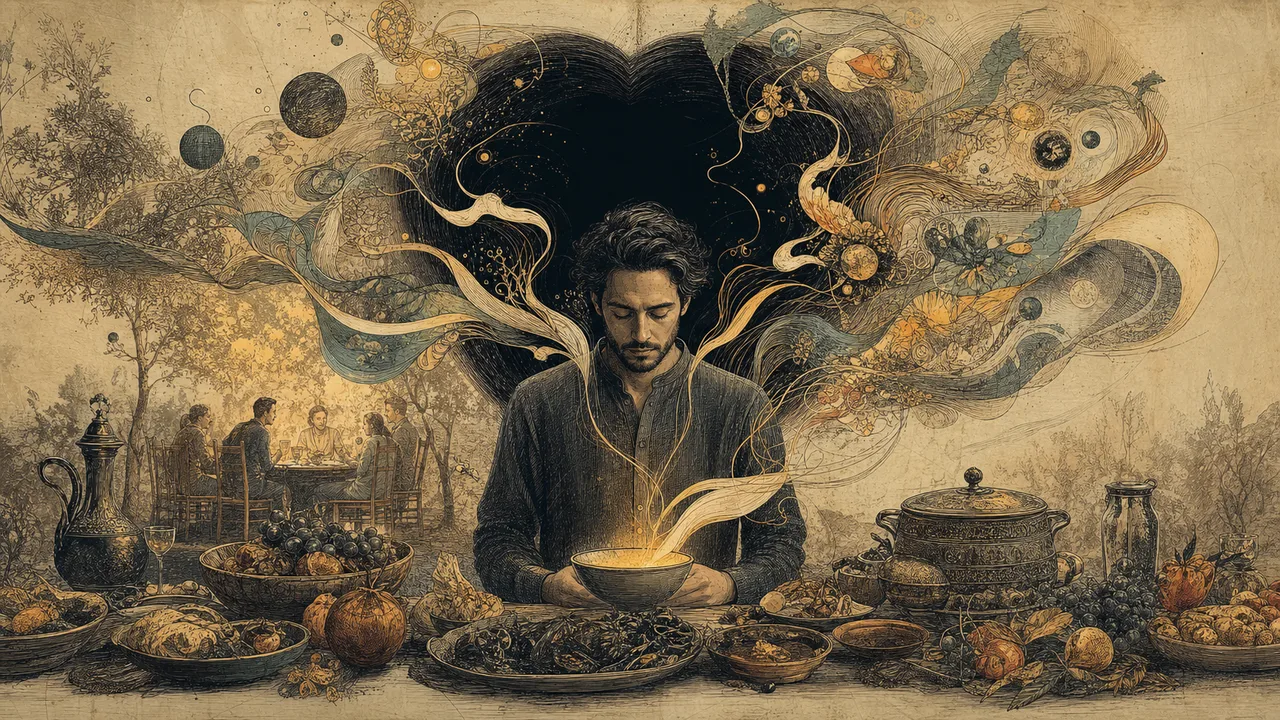
Gluttony is the disordered desire to eat or drink. It appears when food stops serving primarily hunger, nutrition and fellowship and begins to be used to silence anxiety, loneliness, frustration, boredom or sadness. Excess tries to fill a need that does not belong to the body, but the relief usually lasts only a short time.
In this article, you will understand why feeling hungry and enjoying food are not moral failings. You will also learn about the five classical forms of gluttony, the difference between physical and emotional hunger, the cycle created by guilt, and the distinction between gluttony and binge eating.
Continue reading to recognize what may be driving excess and understand how temperance restores freedom to one's relationship with food. In this way, food can return to its proper place of nourishing, providing conscious pleasure and bringing people together without carrying needs it cannot resolve.
What is gluttony?
Gluttony is the disordered desire to eat or drink. It appears when the pleasure related to food exceeds its proper function and begins to control choices, thoughts and behaviors.
This does not mean there is a universal amount that can automatically separate balanced eating from gluttony. Needs vary according to age, health, physical activity, metabolism and other personal conditions.
Thomas Aquinas explains that someone may consume a larger amount because they believe it is necessary without acting out of gluttony. For him, the vice is characterized when a person knowingly exceeds proper measure for the sake of the pleasure sought in food.
Gluttony is not determined by body weight either. A thin person may have a disordered relationship with food, while someone with a larger body may eat without loss of control or obsession.
The heart of the matter is freedom. Can the person recognize hunger, enjoy the meal and stop consciously, or do they feel compelled to continue even after the bodily need has been met?
Food remains a good when it contributes to sustaining life and fellowship. It becomes an object of gluttony when it is assigned the task of providing a satisfaction that must be repeated continually because it never reaches the true inner need.
Why is gluttony considered a capital sin?
Sins are called capital because they can generate other vices and behaviors. They function as roots from which different choices emerge.
Gluttony can encourage impulsiveness, negligence, loss of attention, waste and difficulty controlling other desires. A person accustomed to responding immediately to every desire may find it harder to endure frustration in other areas.
Thomas Aquinas considers gluttony a capital vice because pleasure is naturally desirable and can become an end capable of motivating many behaviors. He observes that gluttony focuses more on the pleasure of eating than on the need for food.
Tradition does not claim that every occasional excess has the same gravity. A person may overeat during a celebration without turning this behavior into a permanent disposition.
Vice develops through repetition. When a behavior is chosen continually, it can strengthen inclinations, obscure judgment and encourage further repetition. The Catechism explains that capital sins receive this name because they generate other sins and vices.
Gluttony becomes capital when it ceases to be an isolated episode and begins to organize a person's relationship with pleasure, discomfort, waiting and satisfaction.
How did gluttony enter the list of capital sins?
Gluttony occupied first place in the list of eight thoughts drawn up by Evagrius Ponticus in the fourth century. These thoughts were patterns capable of disturbing the monks' minds and drawing them away from spiritual discipline.
Evagrius did not deal only with the external act of eating. The thought of gluttony could make a monk imagine future illnesses, worry excessively about food and abandon his way of life for fear of not receiving the necessary care.
Gluttony's position at the beginning of the list had a practical meaning. Food meets an indispensable need, but precisely because it is necessary, it also offers a constant opportunity to confuse need with desire.
John Cassian transmitted the classification of the eight principal vices to Latin Christianity. Later, Gregory the Great reorganized the tradition, and gluttony remained among the vices that would form the Western list of the seven capital sins.
In monastic spirituality, learning to eat consciously was part of training the will. The aim was not to declare war on the body, but to prevent a bodily need from governing the mind.
The challenge lay in recognizing proper measure. Because hunger and pleasure appear together, a person needs to learn to distinguish what sustains life from what merely seeks to prolong satisfaction.
Feeling hungry and enjoying food are not gluttony
Hunger is a natural need of the body. Feeling hungry, seeking food and experiencing satisfaction after eating are not moral failings.
Thomas Aquinas distinguishes natural appetite from disordered desire. According to him, gluttony is not found in the simple need to eat or drink, but in the way sensory desire departs from conscious measure.
Enjoying cooking, trying flavors or taking part in a special meal does not constitute gluttony either. Pleasure is part of eating and helps this necessary act be experienced pleasantly.
Christian tradition itself includes banquets, sharing and celebrations in its religious language. In a catechesis about gluttony, Pope Francis observed that the Gospels present Jesus taking part in meals and valuing the joy of fellowship at the table. The problem is not food, but the relationship established with it.
Imbalance appears when eating becomes a predominant end, when the search for a certain pleasure creates anxiety or when a meal is no longer enjoyed because it must be consumed urgently.
Temperance does not eliminate pleasure. It allows pleasure to be enjoyed without turning satisfaction into an obligation that is impossible to interrupt.
The five classical forms of gluttony
Gregory the Great described five ways in which desire related to food could lose its proper measure. This classification was later taken up and analyzed by Thomas Aquinas.
The first consists of continually anticipating the time to eat out of impatience. The person cannot wait until the appropriate time, not because of a real need, but because the expectation of pleasure becomes difficult to bear.
The second appears in the excessive search for expensive or luxurious foods. The problem is not consuming something of quality, but turning refinement, price or exclusivity into permanent demands.
The third manifests in excessive concern with preparation. The person becomes unable to accept anything that has not been prepared exactly according to their preferences.
The fourth is excess in quantity. Even after feeling full, the person continues eating to prolong pleasure or because they have lost attention to the body's signals.
The fifth lies in voracity, in an impatient and uncontrolled way of eating. Food is consumed quickly, almost without being perceived, as if an urgent need had to be satisfied.
These forms show that gluttony does not depend only on quantity. It can also appear in timing, demanded quality, preparation or the intensity of desire.
What does it mean to try to fill a void with food?
The void is a feeling of lack that a person cannot always identify. It may involve loneliness, lack of purpose, rejection, fatigue, anxiety, frustration or a need for comfort.
When these emotions find no other form of expression, food may provide an immediate response. It occupies the body, stimulates the senses and temporarily interrupts contact with discomfort.
This mechanism does not necessarily occur consciously. A person may open a package, order a meal or look for something sweet before even noticing what they were feeling.
Emotional eating is described by MedlinePlus as using food to cope with difficult emotions. Food can temporarily reduce stress, but repeatedly using this resource tends to form a habit in which certain feelings automatically awaken the desire to eat.
The feeling of being filled lasts only briefly because food responded to the body, not to the emotional need. After the pleasure subsides, loneliness, fear or frustration remain.
The problem is not seeking comfort in an occasional meal. Difficulty arises when this becomes the main or only way of dealing with any discomfort.
How can physical hunger be distinguished from emotional hunger?
Physical hunger usually develops gradually. The body presents signals that increase over time, and different kinds of food can meet the need.
Emotional hunger may appear suddenly and be accompanied by a desire for something specific. The person does not simply want nourishment; they seek a particular sensation, flavor or texture that they associate with relief.
Another difference appears after the meal. When physical hunger is met, bodily satisfaction tends to increase. In emotional eating, the person may continue seeking food even after they are physically full.
Emotional hunger is also often connected to recurring events or states. Arguments, demands, nighttime loneliness, boredom and fatigue may function as signals that initiate the behavior.
MedlinePlus recommends observing the people, situations, times and emotions that awaken the desire to eat. This observation helps identify when food is being used to respond to something other than hunger.
This distinction does not need to be perfect. Physical hunger and emotion can appear at the same time. The aim is not to monitor the body rigidly, but to expand awareness of what is guiding the choice.
Can gluttony manifest without large quantities?
Gluttony does not depend exclusively on enormous meals. It can also appear as constant concern with flavors, mealtimes, preparation and opportunities to eat.
A person may consume moderate portions and still organize much of their thinking around food. They plan the next experience while still eating and feel irritated when they cannot get what they want.
There may also be a continual search for rare, expensive or sophisticated products. The problem is not gastronomy, but the inability to accept ordinary meals without frustration or contempt.
Another manifestation is eating small amounts repeatedly throughout the day, not because of hunger, but to avoid any contact with boredom, anxiety or silence.
The classical classification of the five forms of gluttony already recognized that the vice could lie in timing, quality, preparation and manner of consumption, not only in the amount eaten.
Proper measure cannot be determined by looking only at the plate. Attention, freedom, motivation and the place food occupies in life must also be considered.
Can guilt strengthen the cycle of excess?
After eating more than intended, a person may feel guilty and promise never to repeat the behavior. This promise is often accompanied by rigid rules and punishments.
They decide to fast without guidance, remove many foods or compensate for the excess through restrictions. For a while, they manage to stay in control, but deprivation increases hunger, anxiety and preoccupation with food.
When they finally break the rule, they interpret the episode as a total failure. Instead of returning to regular eating, they continue eating because they believe they have already lost control.
The NIDDK reports that improperly restrictive eating practices, such as skipping meals, eating too little or avoiding certain food groups, may contribute to binge episodes in some people.
This does not mean that all meal planning is harmful. Schedules, conscious choices and nutritional guidance can promote a balanced relationship.
The problem lies in punishment. Intense guilt focuses attention on the failure and may prevent a person from understanding the emotions, conditions and habits involved in the behavior.
Transforming one's relationship with food requires responsibility, but not humiliation. A person needs to investigate the pattern without turning each episode into proof of a lack of worth.
Are gluttony and binge eating the same thing?
Gluttony is a moral and spiritual concept. Binge-eating disorder is a clinical condition that needs to be evaluated by health professionals.
The disorder involves recurring episodes in which a person consumes a large amount of food in a short time and feels unable to control what or how much they are eating. Other signs may include eating quickly, continuing until uncomfortable, eating without hunger, hiding the behavior and feeling guilt or shame afterward.
A person should not be diagnosed with a disorder because they overate at a party or because someone disapproves of their eating.
Likewise, an eating disorder should not be treated only as a lack of discipline or spiritual weakness. The NIMH describes eating disorders as serious illnesses related to biological, psychological, behavioral and social factors that can be treated.
Moral language can increase shame when used carelessly. Someone experiencing recurring loss of control needs support and proper evaluation, not merely condemnation.
Spiritual reflection, psychological counseling, medical guidance and nutritional care can act in different ways. One resource does not have to exclude the others.
When there are repeated episodes of loss of control, intense distress, self-induced vomiting, use of laxatives, extreme restriction or harm to health, it is important to seek a qualified professional.
Can gluttony also be understood as excessive consumption?
In its more specific historical sense, gluttony is linked to food and drink. Applying it to shopping, entertainment, information and other stimuli is a symbolic extension.
This comparison can be useful because different excesses share the same movement: consuming continually to avoid the void or prolong a pleasant sensation.
A person finishes one series and immediately begins another. They buy something new and soon seek the next product. They move from one piece of information to another without time to understand or integrate what they received.
In this expanded sense, there is no satiety because the aim is not really to use what was consumed. The purpose is to keep the mind occupied and prevent an encounter with discomfort.
Pope Francis used a similar social extension when he related gluttony to turning people into consumers and to the voracious exploitation of natural resources. He distinguished the individual act of eating food from the collective logic of taking and accumulating without measure.
It is important to maintain the historical distinction. Buying too much or consuming content excessively does not literally correspond to the traditional definition of gluttony, but it can reveal a similar pattern of dissatisfaction and lack of measure.
Excess prevents true satisfaction
Gluttony promises satisfaction, but makes the very experience of being satisfied more difficult. When a person eats quickly, distractedly or driven by urgency, they perceive less flavor and fewer bodily signals.
The quantity increases, but the experience diminishes. Food is consumed without attention and needs to be repeated because it was not fully perceived.
This behavior can also produce an adversarial relationship with the body. The person stops trusting hunger and satiety and begins following only rules, impulses or emotions.
Another consequence is the loss of gratitude. Food becomes something automatic, demanded or wasted, rather than a resource that depends on work, nature and the participation of many people.
Gluttony can also reduce fellowship. The meal ceases to be an encounter and becomes mere consumption, often carried out in front of screens or in isolation.
Excess does not increase pleasure indefinitely. At a certain point, it replaces pleasure with discomfort, but the person continues because they are no longer responding to taste or hunger.
Temperance is the virtue opposed to gluttony
The virtue traditionally opposed to gluttony is temperance. It moderates attraction to pleasures and seeks to maintain balance in the use of goods.
Temperance does not mean the absence of desire. Nor does it require every meal to be minimal, flavorless or devoid of joy.
According to the Catechism, this virtue strengthens the will's mastery over instincts and keeps desires within appropriate limits. Its purpose is to direct appetites toward the good, not to destroy the capacity for pleasure.
A temperate person can take part in a celebration, enjoy a dessert and try different dishes. The difference lies in retaining the ability to choose.
They do not need to consume everything because it is available, nor interpret every limit as deprivation. They can recognize when the experience has already fulfilled its purpose.
Temperance also avoids the opposite extreme. Rejecting all pleasure, developing fear of food or imposing destructive restrictions does not represent balance.
Virtue lies in conscious measure: eating to nourish, enjoy, share and celebrate without giving food the responsibility of resolving every need in life.
How can the relationship with food be transformed?
The first step is to observe the moment before the behavior. What happened before the desire to eat? Did hunger, anxiety, fatigue, rejection, irritation or boredom arise?
Naming the emotion creates space between sensation and response. The person stops acting only automatically and begins to perceive what need they are trying to meet.
It is also important to eat with greater presence. Reducing distractions, chewing attentively and noticing flavors and bodily signals helps restore the experience of the meal. MedlinePlus recommends slowing down and observing the patterns and situations that encourage emotional eating.
Creating other forms of emotional regulation is also necessary. Talking, walking, resting, writing, seeking support and dealing directly with the problem broaden the possible responses.
A person can also observe rigid rules that maintain the cycle of restriction and excess. In some cases, organizing regular meals and seeking professional guidance is more effective than beginning a new food-related punishment.
Spiritual practice can contribute through prayer, gratitude and awareness. The aim is not to regard food as an enemy, but to return it to its proper function.
When there is frequent loss of control or significant distress, transformation should not depend only on willpower. Medical, psychological and nutritional evaluation may be necessary.
Food does not need to carry the whole weight of life
Food can nourish, comfort and bring people together. It can be part of celebrations, memories and moments of rest.
The problem begins when it is given a task it cannot fulfill: eliminating loneliness, producing personal worth, resolving conflicts or permanently driving away anxiety.
No meal can definitively fill a need for affection, purpose or belonging. When these needs remain unnamed, a person may continue eating and still feel that something is missing.
Overcoming gluttony does not mean ceasing to enjoy food. It means learning to recognize when the body needs nourishment and when another part of life is asking for care.
Temperance restores freedom because it allows enjoyment without control by the object of pleasure. A person can choose to eat, choose to stop and choose to seek another response when they realize the hunger does not belong to the body.
When the void is understood, food is no longer used as an attempt to escape. It returns to its place: sustaining life, providing conscious pleasure and participating in fellowship among people.
Frequently Asked Questions About Gluttony
Gluttony is the disordered desire to eat or drink. It appears when the pleasure related to food exceeds its proper function and begins to control choices, thoughts and behaviors.
No. Hunger is a natural need, and pleasure is part of eating. Imbalance appears when eating becomes a predominant end and a person loses the ability to recognize proper measure.
Physical hunger usually arises gradually and can be satisfied by different foods. Emotional hunger may appear suddenly, connected to an emotion and the desire for a specific flavor or sensation.
No. Gluttony is a moral and spiritual concept. Binge-eating disorder is a serious clinical condition that needs to be evaluated by health professionals.
The virtue opposed to gluttony is temperance. It makes it possible to enjoy food and other goods without losing proper measure, freedom of choice and the ability to stop.
Continue exploring with practical reading
Understanding why food may be used to silence a void helps you recognize excess without guilt and recover a more conscious relationship with pleasure.
Explore the e-book collection to deepen your self-knowledge through clear, practical reading focused on inner transformation.
Explore the e-books
About the author
Prof. Tibério Z has more than 30 years of experience teaching spirituality, metaphysics, holistic therapies and consciousness development.