
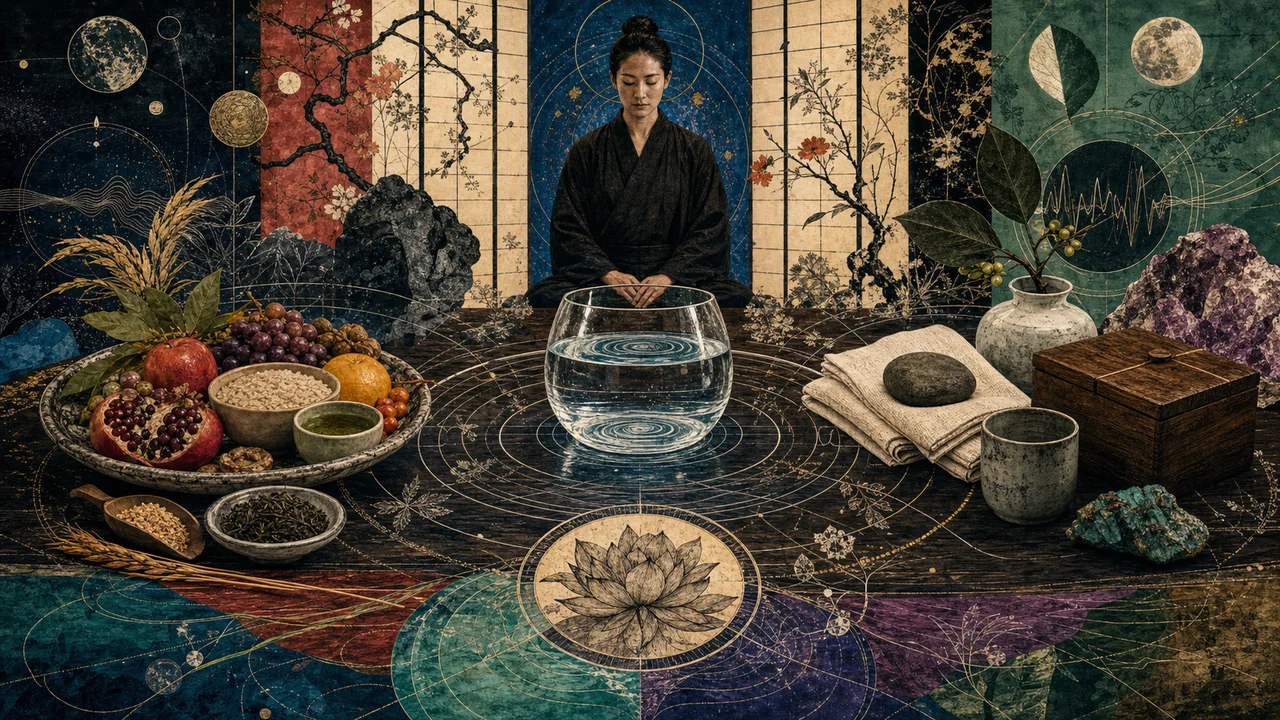
It is possible to apply Reiki to water, food, and objects because they all have a vibrational field and participate in energetic exchanges with people and environments. The application is performed through the hands, attention, and a clear intention directed toward the element that will receive the frequency.
In this article, you will understand the energetic principle that supports this type of application, how to prepare the Reiki practitioner and the intention, and how to apply Reiki to water, food, personal objects, crystals, and therapeutic instruments.
Continue reading to follow each of these applications and the differences among them.
The Energetic Principle of the Application
Everything that exists is organized through vibrational frequencies. Living bodies, water, food, furniture, and objects have different structures, but they all participate in energetic interactions with people and the surrounding environment.
When an element is touched, prepared, or used, an exchange of energy occurs. Thoughts, feelings, and intentions present at that moment can produce information that becomes temporarily associated with the field of the food, water, or object.
Reiki introduces a consciously chosen frequency into this process. The application does not transform the element into another substance, but organizes its vibrational quality according to the intention maintained by the practitioner.
Preparing the Reiki Practitioner and the Intention
Before beginning, the Reiki practitioner needs to organize their own state. Agitation, worry, or an excessive desire to produce a particular result can make the intention unclear and hinder concentration during the application.
A few moments of silence and breathing help reduce distraction. Afterward, the practitioner holds the container or brings their hands close to the chosen element, clearly recognizing what will receive Reiki.
The intention should be short and objective. Balance, calm, gratitude, vitality, or harmonization are examples of possible directions. Vague commands or many different purposes at the same time reduce the precision of the energetic work.
Applying Reiki to Water
To apply Reiki to water, the practitioner can place a glass or bottle between their hands. The palms remain close to the container while attention is directed toward the water and the frequency that will be transmitted.
The intention may relate to emotional balance, rest, mental clarity, or general harmony. It is not necessary to imagine physical changes in the molecules, but to maintain firm awareness of the chosen vibrational purpose.
Water has a structure that is sensitive to energetic programming and can be used as complementary support in everyday life. The application can also be performed by placing a piece of paper with a written intention beneath the container, provided that the Reiki practitioner remains clear about the goal.
Applying Reiki to Food
Food can receive Reiki before, during, or after preparation. The practitioner can position their hands above the plate, pot, or ingredients and direct the energy toward the whole.
During preparation, thoughts and emotions also participate in the frequency of the food. Cooking with irritation, haste, or conflict produces a different vibrational quality from preparing food with attention, care, and presence.
The application can be used to transmit a frequency of gratitude, balance, or vitality. Food absorbs information during preparation and contact, making conscious intention a way of energetically organizing what will be consumed.
Applying Reiki to Personal Objects
Personal objects remain in frequent contact with the field of the person who uses them. Clothes, jewelry, bags, cell phones, books, and everyday items can register information connected to the situations in which they were used.
The Reiki practitioner can hold the object between their hands or keep their hands a few inches above it. The intention can be directed toward neutralizing previous accumulations, reorganizing the field, or preparing the item for a new purpose.
This work can be useful when the object was used in an emotionally intense situation, passed through many hands, or was stored in an energetically charged environment. Walls, furniture, and objects function as receivers and can adjust to the predominant frequency of a place.
Applying Reiki to Crystals and Therapeutic Instruments
Crystals can receive Reiki and then distribute the programmed frequency for a longer period. They function as amplifiers, increasing the intensity of the energy they capture and emit in the environment or during a therapeutic practice.
Before programming, it is important to energetically cleanse the crystal. Then the Reiki practitioner can hold it between their hands, transmit Reiki, and establish one clear function, such as balance, protection, or harmonization.
Other instruments can also receive the application, including pendulums, massage tables, cushions, and objects used during sessions. The intention is to reorganize the material's field and prevent it from continuing to carry frequencies accumulated through previous uses.
Application Time and How Long the Frequency Remains
There is no single duration for every element. A glass of water may receive Reiki for a few minutes, while a crystal or larger object may be worked with for a longer period.
The practitioner can finish when they notice a reduction in the flow between their hands, a loss of concentration, or an internal sense of completion. Focus and clarity are more important than mechanically extending the application.
The transmitted frequency may remain until it comes into contact with a stronger or different pattern. Therefore, heavily used objects and crystals exposed to many sessions need to be cleansed and programmed again periodically.
Limits and Responsibility in Practice
Reiki does not make unsafe water suitable for drinking, restore spoiled food, or eliminate physical risks present in an object. Energetic care needs to go together with hygiene, preservation, and responsible use.
There is also no need to create fear that everything is energetically contaminated. Exchanges are part of life, and the application should be used as a conscious harmonization practice, not as a compulsive ritual performed before every contact.
The usefulness of Reiki lies in organized intention and the quality of presence. Water, food, and objects can receive this frequency, but everyday balance continues to depend on how a person thinks, feels, acts, and concretely cares for what they use.
Frequently Asked Questions
Yes. Reiki can be directed toward the vibrational field of water, food, and objects through the hands, attention, and intention.
No. The application acts on the energetic field and does not change the basic material characteristics of water, food, or objects.
The practitioner can hold a glass or bottle between their hands and maintain a clear intention of balance, harmony, or another suitable purpose for a few minutes.
Yes. Personal objects can receive Reiki to neutralize accumulations, reorganize their field, or prepare the item for a new purpose.
No. Water needs to be safe to drink, food needs to be fit for consumption, and objects must continue to be used safely.
Continue learning with practical guidance
Understanding how to apply Reiki to water, food, and objects helps us use the practice with clear intention without confusing energetic care with material neglect.
The 21-Day Reiki Self-Treatment Guide organizes these foundations in a clear sequence for those who want to study and practice responsibly.
Discover the complete guide
About the author
Prof. Tibério Z has more than 30 years of experience teaching spirituality, metaphysics, holistic therapies and consciousness development.