
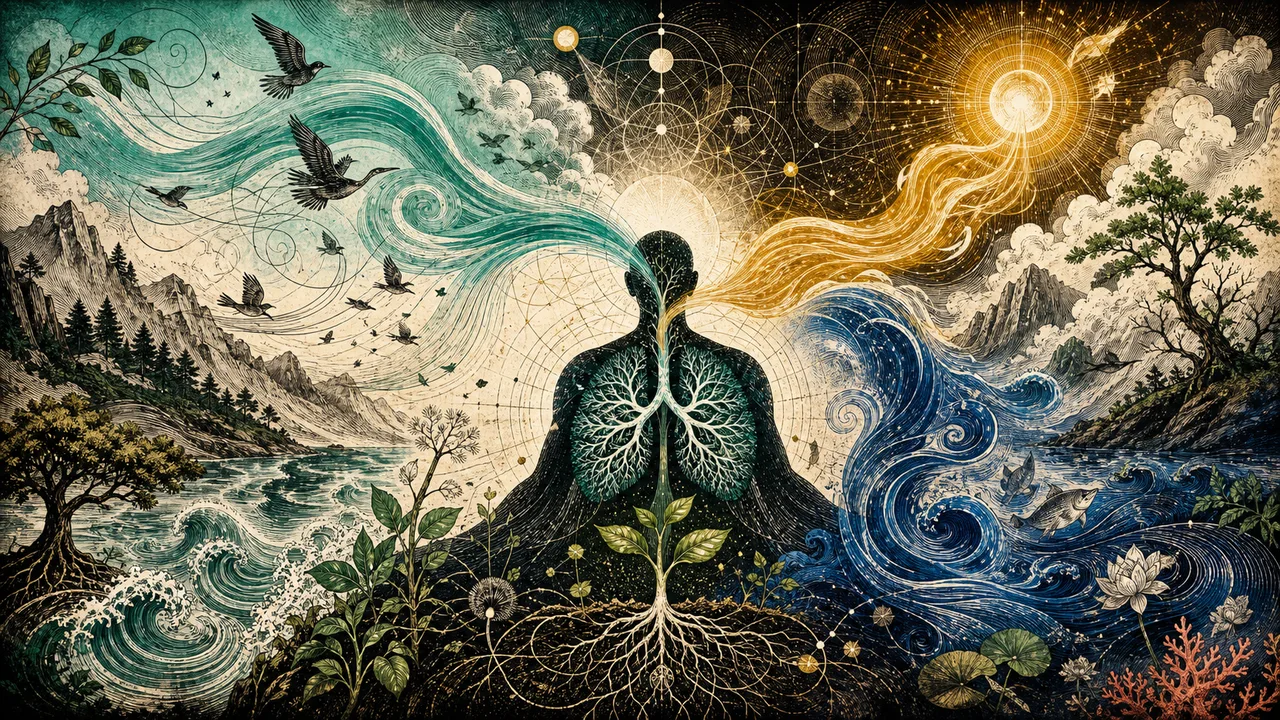
Prana, chi and vital energy are names used to explain the force that sustains life and keeps the energy body functioning. This energy is not the physical body, but it participates in the organism's vitality, energetic circulation and the connection among body, emotions, mind and consciousness.
In this article, you will understand what vital energy is, what prana is, what chi is, whether these terms refer to the same thing, how vital energy differs from physical energy and where it is present.
Continue reading to follow these distinctions and organize the vocabulary used in energy practices.
What is vital energy?
Vital energy is the force that sustains the activity of the energy body and participates in maintaining life. It is present in living beings, nature and the different environments with which we come into contact. To understand how this energy relates to energy centers, also read the pillar article complete guide to the 7 chakras for beginners, where I explain chakras, nadis, imbalances and paths toward harmonization.
This energy sustains the etheric body, which accompanies and energetically supplies the physical organism. Without it, the energy body could not maintain its organization or fulfill its role of connecting with the biological body.
The term vital energy is a general expression. It does not belong exclusively to a religion or spiritual school and is used to bring together similar concepts found in different traditions of healing, meditation and energetic development.
What is prana?
Prana is the name given to vital energy in the traditions of India. The word appears in the teachings of Yoga, the Upanishads, Ayurveda and different schools that study breathing, meditation and the subtle body.
In a broad sense, prana is the energy that animates the body and allows its energetic functions to be maintained. It is present not only in the air we breathe, but also in food, water, nature and the frequencies that reach the human field.
In some Indian texts, the word prana also has a more specific meaning and indicates one of the movements of energy within the organism. However, when we speak of chakras, we generally use prana in the broad sense of vital energy.
What is chi?
Chi is the name used by the Chinese tradition to describe the energy that sustains and moves life. The word can also be written as qi, the form adopted by the modern system for transcribing the Chinese language.
This concept occupies a central position in Traditional Chinese Medicine, Qigong, Tai Chi Chuan and Taoist practices. The functioning of the organism, emotions and mind is understood through the way chi moves and transforms.
In Chinese understanding, chi needs to circulate and adapt to the needs of each region. When this circulation happens properly, there is balance. When the flow becomes insufficient, excessive or interrupted, different forms of energetic disorganization arise.
Are prana, chi and vital energy the same thing?
The three terms refer to the same general principle: the existence of an energy that sustains life and circulates through the energy body. For this reason, many explanations use prana, chi and vital energy as synonyms.
However, this does not mean that every system explains this energy in exactly the same way. Yoga organizes prana through chakras, nadis and the different energetic movements studied in the Indian tradition.
Chinese Medicine analyzes chi through meridians, energy organs, Yin and Yang and the five phases. The energy observed is the same, but each tradition created its own map to explain how it circulates and manifests.
Is vital energy the same as physical energy?
Vital energy should not be confused with electricity, heat, glucose or calories. These forms of energy belong to physical functioning and can be observed or measured with instruments used by science.
Vital energy acts in the subtle body. It provides energetic support to the organism, but does not replace the physical processes responsible for producing strength, heat and movement.
A person may feel tired because of a lack of sleep, inadequate nutrition, anemia, hormonal changes or other physical conditions. Therefore, not every lack of energy should be attributed to a problem with prana or chi. Energetic care complements physical care, but it does not replace it.
Where is vital energy present?
Vital energy is present in everything that has life. Human beings, animals, plants and other organisms maintain energy fields that accompany their physical existence.
It is also available in the environment. The earth, air, water, sunlight and natural spaces offer different qualities of energy with which the energy body can come into contact.
Environments built by people also have a vibrational condition. A home, workplace or religious space receives the energies produced by the activities, thoughts and emotions of those who spend time there.
How do human beings receive vital energy?
The energy body receives vital energy continuously. This happens through breathing, eating, contact with nature and exchanges with environments and other people.
Chakras participate in this reception because they function as specialized points for receiving energy. Each center is prepared to interact with particular frequencies and direct them to the corresponding regions.
We also receive energy through smaller centers distributed throughout the etheric body. Chakras located in the hands, feet and other regions participate in exchanges with the environment, while the large centers organize broader functions.
What is the relationship between breathing and prana?
Breathing is one of the main ways of receiving prana, but prana is not synonymous with oxygen. Oxygen is a physical substance used by cells, while prana is the subtle energy present in the air and received by the energy body.
This explains why Yoga traditions devote so much attention to the way we breathe. Short, rapid breathing moves energy differently from slow, deep and conscious breathing.
Pranayamas were developed to work with this relationship. The word pranayama indicates directing or expanding prana through breathing, allowing practitioners to consciously influence their energetic state.
How do food and water carry vital energy?
Food provides nutrients to the organism, but it also carries vital energy. The quality of this energy depends on its origin, state of preservation and the conditions in which the food was produced and prepared.
Fresh food has a different energetic condition from food that has undergone lengthy industrial processing or remained stored for a long time. This difference does not remove its nutritional value, but it modifies the quality of energy received by the subtle body.
Water also absorbs and carries frequencies. When drinking water, we receive not only its physical composition but also the energy it carries. Hydration, nutrition and energetic vitality are therefore related aspects, although they are not exactly the same thing.
How does vital energy circulate through the energy body?
After being received, vital energy needs to be carried to every region of the etheric body. This circulation takes place through a network of energy channels that crosses and connects its different parts.
In the Indian tradition, these channels are called nadis. In the Chinese tradition, they are called meridians. The words belong to different systems, but both describe pathways through which energy moves.
Chakras connect to these channels and help direct the flow to the corresponding regions. In this process, the centers receive chi and send it through the energy channels to energetically supply the body.
What is the relationship between vital energy and chakras?
Chakras work directly with vital energy. They function as centers that receive particular frequencies and participate in organizing them within the energy body.
Each chakra has its own tuning. This means it does not receive and use every frequency in the same way, but works mainly with the energies needed by the functions it sustains.
After being received, energy is distributed throughout the field. Chakras are therefore described as centers for processing and distributing vital energy in the subtle body.
Does vital energy also carry frequency and information?
Vital energy does not differ only in quantity. It also has quality, frequency and information. Two people may have a great deal of energy but express it in completely different ways.
One frequency may produce stability and clarity, while another may carry agitation, fear or tension. This happens because thoughts, emotions and intentions interfere with the energy that circulates through and is emitted by the field.
For this reason, increasing the amount of energy is not always enough. The energy body needs to receive appropriate frequencies and be able to use them in an organized way. More energy in a disorganized system may merely intensify the imbalance that already exists.
Understanding vital energy means understanding what nourishes the chakras
Prana, chi and vital energy are different names for the force that animates and sustains the energy body. India organized this knowledge through Yoga and Ayurveda, while China developed its studies through Chinese Medicine and Taoist practices.
This energy is present in air, food, water, nature and the exchanges made throughout the day. The body receives it from different sources and carries it through its energetic anatomy.
Chakras are part of this process because they receive and distribute specific frequencies. Understanding vital energy allows us to see that chakras are not isolated circles, but structures that continuously work with the force sustaining our physical, emotional, mental and spiritual experience.
Frequently Asked Questions
They are names used to explain the subtle force that sustains life, keeps the energy body functioning and participates in the connection among body, emotions, mind and consciousness.
They indicate the same general principle of vital energy, but belong to different traditions. Prana comes from Indian language, while chi or qi belongs to the Chinese tradition.
No. Vital energy is not electricity, glucose, calories or oxygen. It acts in the subtle body and complements, but does not replace, the physical processes of the organism.
It is present in living beings, nature, air, water, food, environments and the energetic exchanges that happen throughout the day.
Breathing is one of the main ways of receiving prana, but prana is not oxygen. Air contains physical oxygen and also subtle energy received by the energy body.
Chakras work directly with vital energy. They receive specific frequencies, organize this flow and distribute energy throughout the subtle body.
Continue exploring the chakras
Understanding prana, chi and vital energy helps us see more clearly what nourishes the chakra system and sustains the energy body.
In the Ultimate Guide to the Seven Chakras, you can deepen this knowledge and learn to recognize how energy circulates, organizes itself and influences each center in the system.
Explore the Ultimate Guide to the Seven Chakras
About the author
Prof. Tibério Z has more than 30 years of experience teaching spirituality, metaphysics, holistic therapies and consciousness development.