
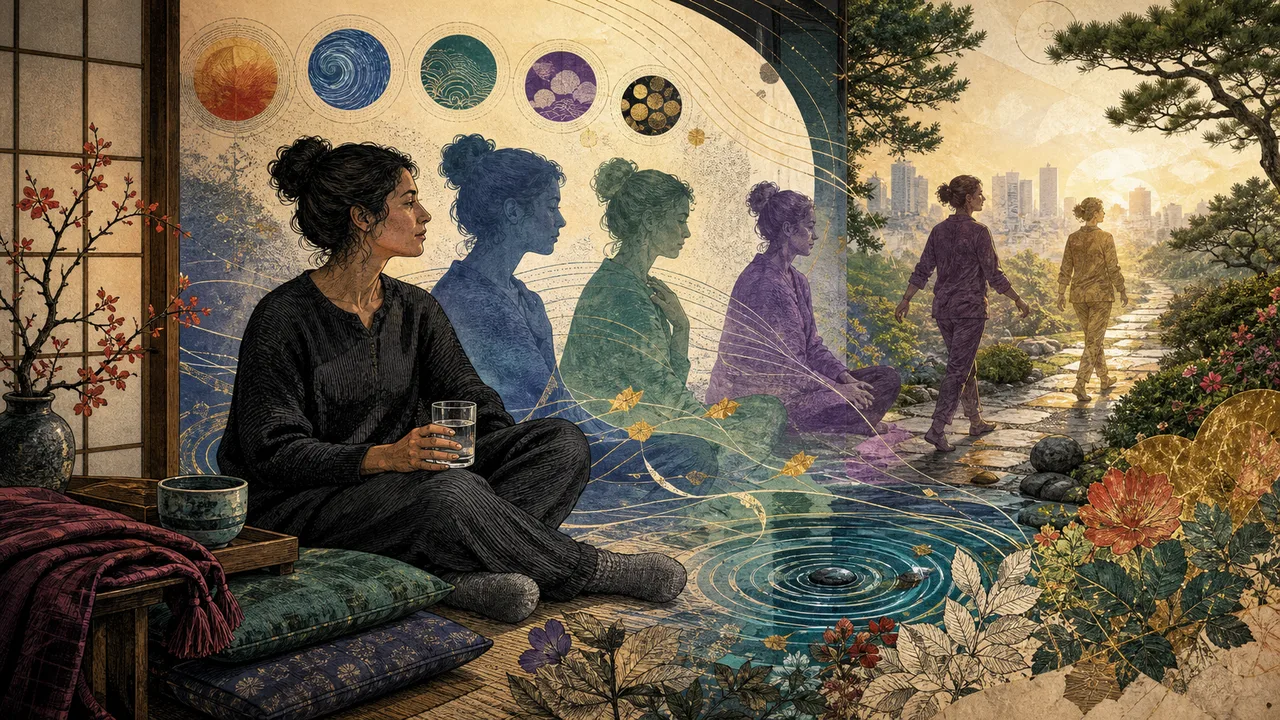
After a Reiki session, a person may notice changes in the body, mind, emotions and their own energy field. Some responses appear immediately, while others become clearer over the following hours as the frequency received continues to be integrated by the chakras and other energy centers.
In this article, you will understand how relaxation continues after the session, how bodily sensations become clearer, what changes can arise in sleep and vitality, and why some emotions become more noticeable.
Continue reading to follow these effects and recognize what happens in the hours that follow.
The continuation of relaxation in the body
The relaxation that begins during the session may remain for some time after the application ends. The person may feel a looser body, calmer breathing and reduced tension held in the shoulders, jaw, chest or abdomen.
This happens because the transmitted energy promotes circulation of the flow and allows areas kept under strain to gradually reduce their state of contraction. When the mind slows down, the body also stops maintaining part of the vigilance and defensiveness accumulated throughout the day.
This sensation can make ordinary movements and activities feel lighter. However, the body may also show that it needs a longer pause, especially when the person has been carrying fatigue and overload without recognizing them. Respecting this rhythm helps make better use of the state of reorganization begun during the session.
A clearer perception of bodily sensations
After Reiki, a person may notice regions that previously went unnoticed. Warmth, tingling, gentle pressure, lightness, heaviness or energetic pulsation may continue for some time in areas that received greater attention during the application.
These sensations should not automatically be interpreted as illnesses, serious blockages or spiritual messages. They simply show that consciousness is more focused on the body and able to perceive movements that are normally concealed by haste and excessive stimulation.
This perception can help recognize practical needs. Hunger, tiredness, tension, comfort and discomfort are important pieces of information about one's own state. Listening to these signals promotes presence, stability and greater respect for physical limits.
Changes in sleep and vitality
Some people feel sleepy after a session, especially when they arrive tired and keep their body functioning through effort. When tension decreases, the need for rest that had been ignored becomes more evident.
Others notice increased vitality. In this case, reorganization of the energy flow reduces the feeling of heaviness and allows vital energy to circulate more steadily, without this meaning agitation or mental acceleration.
There may also be an improvement in preparation for sleep. The application on the head and crown chakra is related to deep relaxation, mental silence and letting go of the concerns that make rest difficult.
Mental silence and clarity of thought
Mental activity may remain reduced after the application. Thoughts continue to arise, but they no longer occupy all of one's attention with the same intensity, allowing situations to be perceived in a more organized way.
This change can facilitate decisions that seemed confusing before the session. When worry, anticipation and excessive analysis diminish, the person can distinguish the concrete problem from interpretations created by fear or insecurity.
Work on the brow chakra promotes the organization of thoughts, inner silence and integration between reason and intuitive perception. This clarity does not provide ready-made answers, but it offers better conditions for evaluating each issue with discernment.
Emotions that may become more noticeable
After Reiki, some emotions may become more evident. Sadness, anger, fear, hurt or the urge to cry do not mean that the application created these contents, but rather that they were already present and became easier to recognize.
While the field remains overloaded, a person may suppress what they feel so they can continue carrying out their activities. When the frequency is reorganized and tension decreases, emotional content finds space to arise without the same resistance.
This movement should be welcomed attentively, but without dramatization. The chakras can store emotional memories that influence reactions and behaviors. Harmonization promotes contact with these records and allows them to be understood more clearly.
Reorganization of the flow through the chakras
Reiki acts directly on the vibrational field and promotes chakra balance. After the session, this reorganization can continue as the centers distribute the energy received to the regions and functions with which they are associated.
A chakra that was overloaded may reduce its concentration of energy, while another that showed less activity may receive greater support. The aim is not to stimulate all centers equally, but to promote communication and balance throughout the whole system.
This reorganization may be perceived as grounding, stability, expansion in the chest, greater clarity or a sense of integration. An application on the root chakra, for example, can strengthen bodily presence and inner security, while work on the upper centers promotes silence and expanded perception.
Individual differences in responses to Reiki
Each person responds according to their sensitivity, emotional state, frequency and the moment of life they are experiencing. Two people seen by the same Reiki practitioner with the same sequence of positions may have completely different experiences.
The same person may also have different responses in different sessions. In one session they may feel warmth and deep relaxation, while in another they notice only calm or no evident sensation. This does not make it possible to conclude that one session was better than the other.
The absence of intense sensations does not mean the absence of energetic action. Perceiving phenomena depends on developed sensitivity and the ability to maintain attention on one's own field. The outcome also needs to be observed in sleep quality, mental clarity, emotional stability and the way a person reacts in the following days.
Integrating the session into everyday life
The hours after the application are a useful period for observing one's own state. Instead of immediately returning to excessive stimulation, the person can preserve a few moments of silence and notice the condition of body, mind and emotions.
This observation helps transform the experience into self-knowledge. If clarity has emerged about a habit, relationship or repetitive way of thinking, the next step is to examine how this content appears in everyday life and what attitudes need to change.
Reiki offers support and can produce immediate relief, but an energetic improvement tends to be temporary when mental and emotional patterns remain the same. Transformation grows stronger when a person uses the clarity received to adjust thoughts, behaviors and choices.
Frequently Asked Questions
A person may notice relaxation, sleepiness, vitality, mental clarity, more noticeable emotions or simply a subtle sense of balance.
Yes. Sleepiness may arise when the body relaxes and recognizes a need for rest that had been ignored.
Yes. The absence of intense sensations does not mean that there was no energetic action. Each person perceives the session differently.
They can. Some emotions that were already present become more noticeable when tension decreases and the field finds space for reorganization.
It is helpful to observe the body, drink water, rest if necessary and avoid immediately returning to excessive stimulation.
Continue learning with practical guidance
Understanding what can happen after a Reiki session helps you observe the responses of body and mind without exaggerated expectations or rushed interpretations.
The 21-Day Reiki Self-Treatment Guide organizes these foundations in a clear sequence for those who want to study and practice responsibly.
Discover the complete guide
About the author
Prof. Tibério Z has more than 30 years of experience teaching spirituality, metaphysics, holistic therapies and consciousness development.